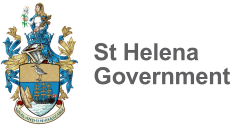
Latest index value and inflation rates for Q1 2026
The latest estimate of the Consumer Price Index (CPI) has been released by the St Helena Statistics Office, for the first quarter of 2026 (Q1 2026). The CPI has been measured at 105.9, a small increase of 0.5% on the previous quarter (Q4 2025) and a 2.3% increase compared to a year ago (Q1 2025). This annual inflation rate of 2.3% is an increase in the rate of 0.1 percentage points compared to the rate measured in Q4 2025, which was 2.2%.
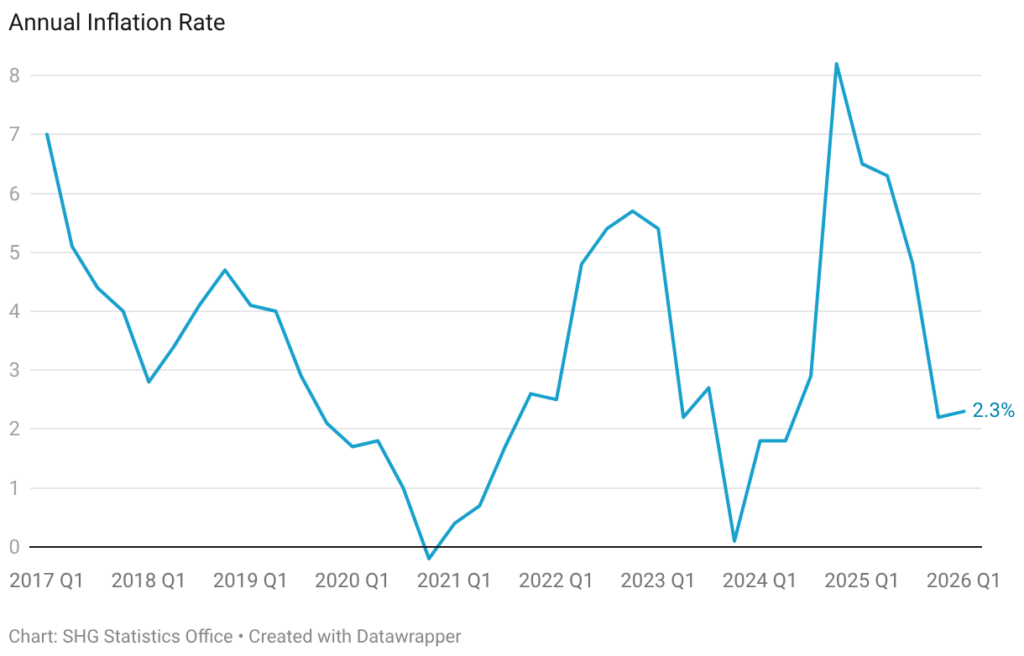
Price changes over the last year
Almost all groups of representative items saw their average prices rise compared to a year ago, apart from Clothing. The highest average annual increase was in Household Energy (10.2%), which is the result of increases to the Electricity tariffs introduced in July 2025. Electricity is the highest weighted individual commodity in the current basket, therefore price changes to this item have a significant impact on the overall annual inflation rate. Alcohol and Tobacco increased by 4.8% during the year between Q1 2025 and Q1 2026, driven mainly by increases in the price of tobacco and wine products (duty rates on alcohol and tobacco imports are increased by more than the rate of inflation each year).
Annual inflation in the Food category rose by 0.2 percentage points, from 0.7% in Q4 2025 to an estimated 0.9% in Q1 2026. Food constitutes over a third of the basket, and this change is partly due to an increase in the price of some common food items such as imported poultry and fresh fruit. Prices in the Communications category are the same as they were a year ago; the last price change to any of the representative items in the group was over a year ago, in Q3 2024.
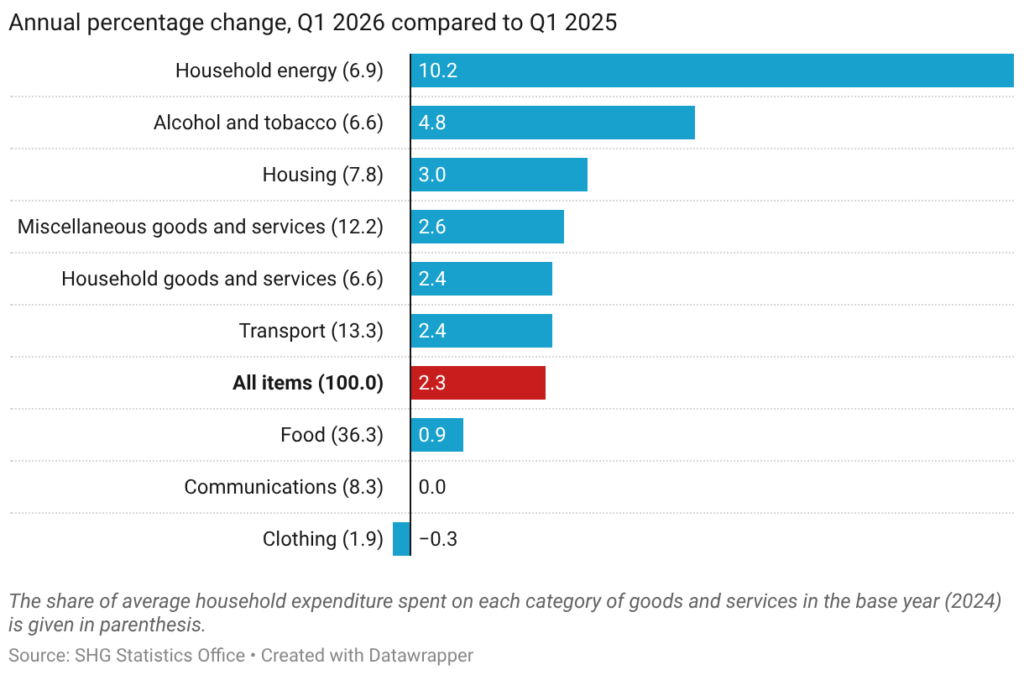
Price changes over the last quarter
The quarterly change in the CPI was 0.5%, comparing the index value in Q4 2025 to its value in Q1 2026. All categories experienced average increases in prices since the last quarter; Alcohol and Tobacco rose by 0.9%, a result of increases to Tobacco products during the quarter, and Miscellaneous Goods and Services also rose by 0.9%, resulting from increases in common household supplies, including toilet rolls. Household Goods and Services and Food both rose by 0.6% during the quarter, with the change in the Food category attributed to a combination of small price changes in some food items with high weights in the basket, like imported meats and dairy products.
Price changes in the UK and South Africa
Changes in both the UK and South Africa can contribute strongly to the price index on St Helena, since the majority of goods imported are purchased in those two countries. In February 2026 annual consumer price inflation in the UK was measured at 3.0% (UK Office for National Statistics), unchanged from January. In South Africa, annual consumer price inflation was also measured at 3.0% in February 2026 (Statistics South Africa), down from 3.5% in January 2026. Changes in the value of the Rand compared to the Pound can have a large effect on the change in the price of goods purchased in South Africa, but during the twelve months between Q1 2025 and Q1 2026 the Pound averaged 23.2 Rand, almost the same as the average value for the previous twelve months (23.3).
Methodology
For details about the data collection and computation process for producing the Consumer Price Index and the inflation rate, please click here.
Where can I get the data?
For detailed tables of the Consumer Price Index and annual inflation rates from 1994 onwards, please download the data series in an Excel-formatted spreadsheet here: https://www.sainthelena.gov.sh/documents/inflation (note that prior to 2024, the series was known as the Retail Price Index). Other datasets, bulletins and reports are also available on our website at www.sainthelena.gov.sh/statistics/resources.
Have more questions or comments?
Please contact us, including if you need data in other formats or have specific queries.