
This update releases new estimates of the purchase value of goods imported to St Helena during the 2025/26 financial year. The detailed data tables used to prepare this release can be downloaded here.
Total value of goods imported
The total value of goods imported to St Helena during the 2025/26 financial year is estimated to be £23.6 million, a decrease of £7.1 million compared to the previous year, or -23.1%. In 2024/25 there was a large one-off increase in the value of machinery and transport equipment imported, resulting from investments in a private project. This was not carried forward into 2025/26, hence the decrease in the total value of imports in 2025/26.
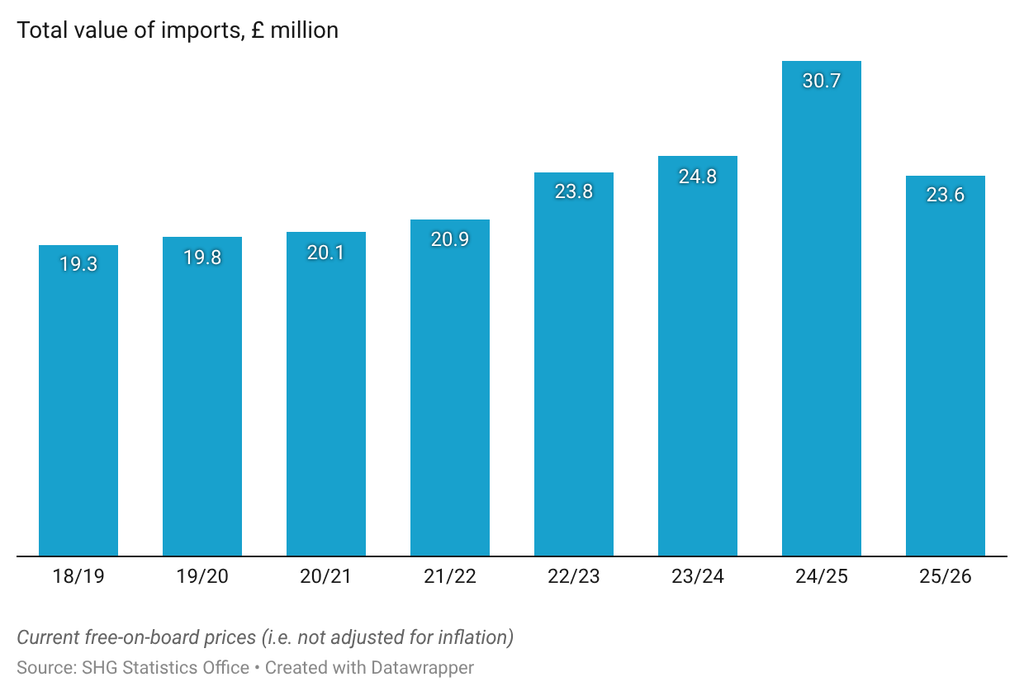
Note that the value of goods is ‘free on board’, which means that it excludes freight and insurance charges. Value-added taxes, sales taxes and other fees paid by importers are also excluded, since these statistics are compiled from declarations made by importers to the St Helena Customs authorities, which do not require these additional fees to be included. It is also not adjusted for inflation; a common term for this is that the valuation is in ‘current prices’.
Type of goods imported
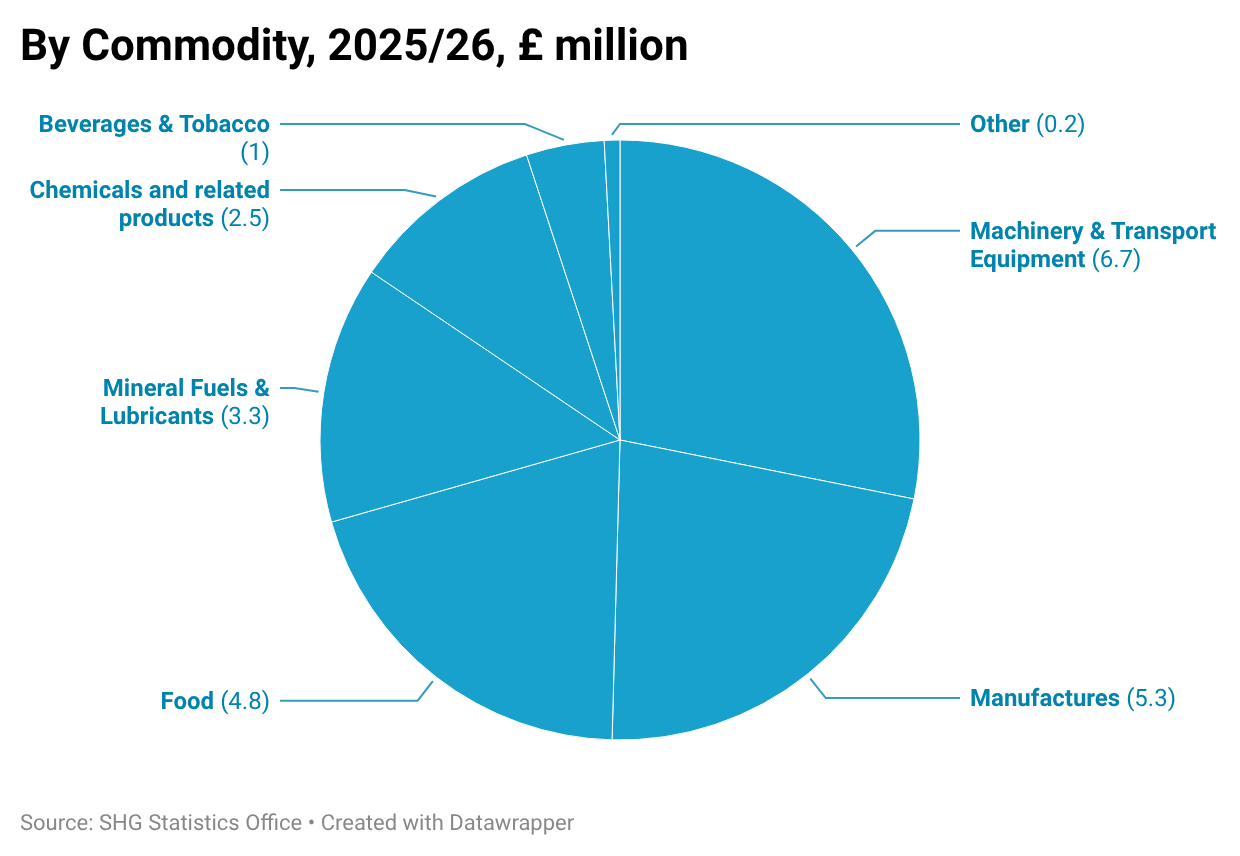
Goods imported to St Helena predominantly fall into one of four major groups: machinery and transport equipment, manufactured goods and articles, food, and mineral fuel and lubricants. Diesel fuel, which is used in St Helena’s electricity power station, is typically among the largest single items each year, arriving by fuel tanker in regular consignments.
Country of purchase of imported goods
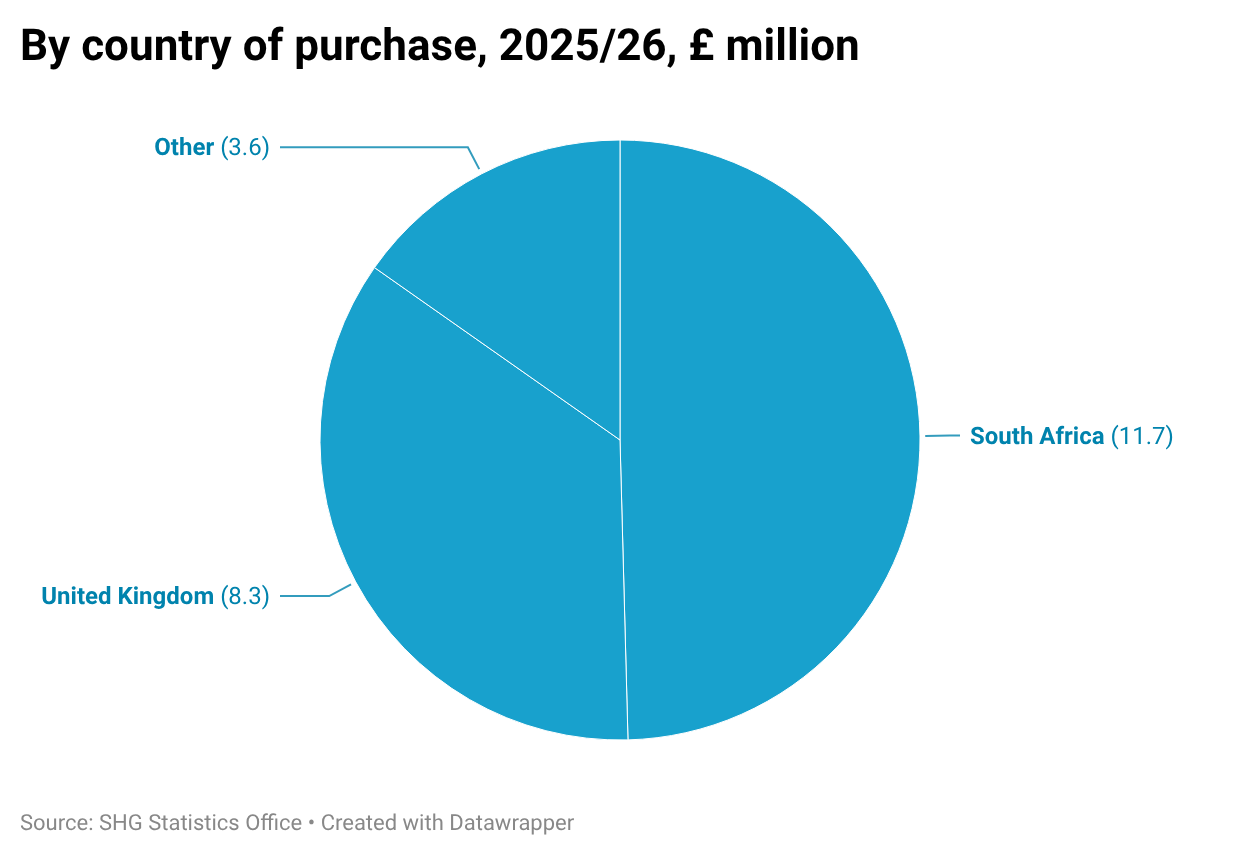
Most goods imported to St Helena are purchased in the United Kingdom or South Africa, reflecting the close ties between St Helena and the UK, and the historical cargo shipping routes between Cape Town in South Africa and Jamestown in St Helena. Historically, St Helenians tend to spend roughly the same in the UK and South Africa on imported goods, although slightly more has been spent in South Africa in recent years than in the UK; this may reflect the relative weakness of the Rand compared to the Pound and the lower cost of freight, making South African goods cheaper to purchase. Imports from other countries were mostly mineral fuel (diesel and petrol), and specialised equipment and transport machinery.
For detailed notes on the methodology used to compile these statistics, please click here. To get in touch, please click here.
Have more questions or comments?
Please contact us, including if you need data in other formats or have specific queries.