
Latest Posts
Each year, St Helena supports the Royal British Legion’s work through the St Helena Poppy Appeal. The poppy appeal is the Legion’s largest annual fundraising campaign and each year has a different focus. This year, The Royal British Legion continues to mark the centenary of the First World War and asks everyone to support the appeal in memory of the fallen and the future of the living.
The poppy is a powerful symbol – worn to commemorate the sacrifices of our Armed Forces and to show support to those serving today, along with their loved ones. The remembrance poppy is especially prominent in the UK – and here on St Helena in the weeks leading up to Remembrance Sunday (on 8 November 2015).
On Saturday 24 and Saturday 31 October, plus Saturday 7 November, the Poppy Appeal – led by Mike Durnford – will be raising funds in lower Jamestown – through the distribution of poppy wristbands, lapel pins, emblem stickers, badges, rulers, bracelets and standard poppies. Uniformed contingents of ex-servicemen, Salvation Army members, Scouts, Guides and volunteers – will be making their way through Main Street and members of the public are encouraged to support the appeal and obtain their poppies in advance of Remembrance Sunday.
The Remembrance Service will be held on Sunday 8 November 2015 at the Cenotaph, beginning at 10.55 am.
SHG
16 October 2015
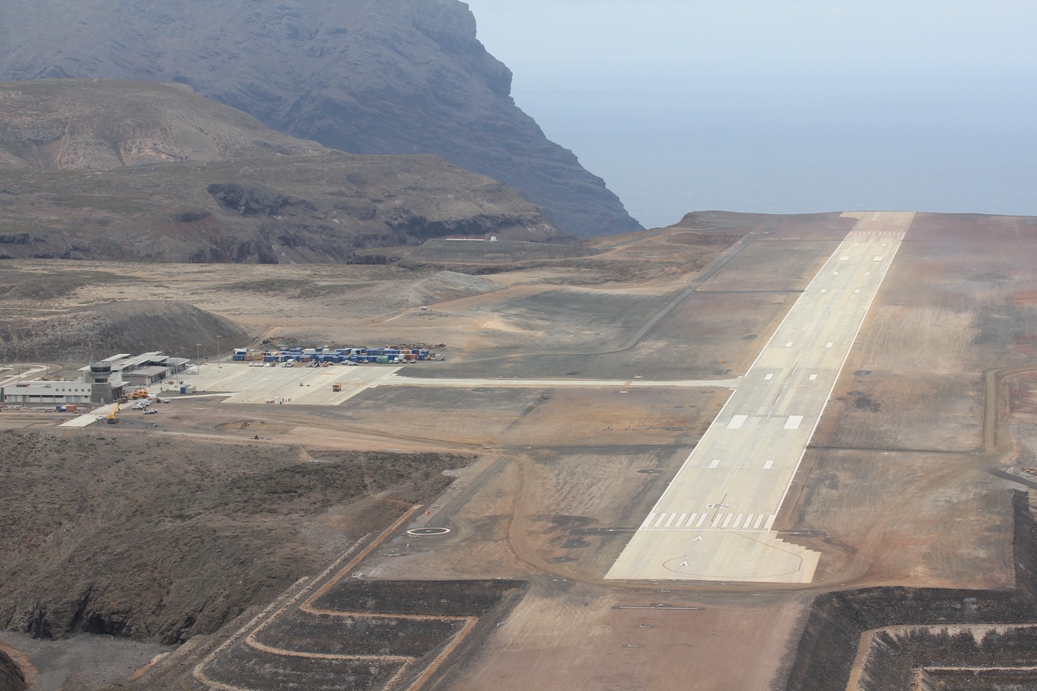
 Another milestone was reached yesterday, Wednesday 14 October 2015, at St Helena Airport – as the Wildcat helicopter from HMS Lancaster touched down and became the first ever rotary-wing aircraft to land at the Island’s Airport. One photos (attached) illustrate this, together with one aerial shot of St Helena Airport.
HMS Lancaster is the first Royal Navy Frigate to deploy with the advanced maritime attack helicopter Wildcat, which many Island residents will have seen in flight this week,conducting reconnaissance and taking aerial footage of the Island.
The versatile Wildcat, the latest generation of multi-role helicopter for the Royal Navy, is designed for a variety of roles, including anti-ship, anti-submarine, ship protection, casualty evacuation, battlefield reconnaissance and general utility.
Wildcat over St Helena Airport
SHG
15 October 2015
Royal Navy Frigate HMS Lancaster and fuel tanker RFA Gold Rover, arrived at St Helena on Monday 12 October 2015 to take part in the bicentennial anniversary of Napoleon’s arrival to the Island – exactly 200 years ago today, 15 October 2015.
 Since their arrival, the crews of both vessels have participated in various activities and bicentenary events and have enjoyed exploring the Island. Today, the Commanders of HMS Lancaster and RFA Gold Rover, accompanied by HE Governor Capes, French Ambassador Jean Mendelson and Prince d’Essling and ships’ personnel conducted a ceremony at Napoleon’s Tomb to commemorate the funeral of Napoleon.
HMS Lancaster has also hosted various activities onboard, including a reception on Tuesday evening when invited guests were able to meet Royal Navy personnel and tour the vessel.
Speaking at the reception, HE Governor Capes welcomed Commander Laughton of HMS Lancaster and Commander Selby of RFA Gold Rover andtheir teams to St Helena.
Governor Capes said:
“The silhouette of Royal Navy ships here in James’ Bay is always a pleasing andreassuring sight to behold, and I have no doubt that the people of St Helena will forever welcome the Royal Navy to their Island.
“I wish you and your crews an enjoyable few days with us in this very special week, as on 15 October, we mark the 200th anniversary of the arrival of perhaps our most reluctant visitor.
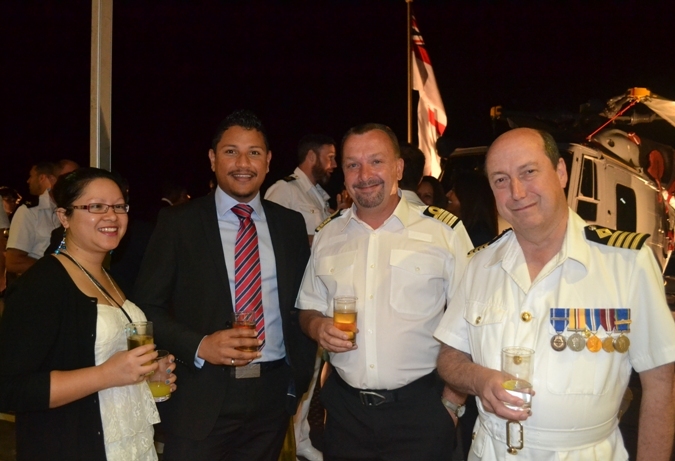
RFA Gold Rover Commander Selby with guests
“The story of Napoleon’s arrival and stay on St Helena is now firmly woven into the fabric of our history, an extraordinary episode creating for us today an important legacy for the Island, a prominent and valued feature of St Helena’s rich and colourful story.
“I am delighted that we have with us for this bicentennial week, and with us now on the Queen’s Frigate, Ambassador Jean Mendelson representing the French Government and Prince d’Essling, President of the Napoleon Foundation, as well as other distinguished visitors from France.
“As we stand here this evening, if Napoleon and Governor Hudson-Lowe were watching us from on high, I wonder what they would be saying to each other.
“On that intriguing note Commander, on behalf of the people of St Helena, our grateful thanks to you for your hospitality, and our thanks to Her Majesty’s Royal Navy for its enduring commitment to the South Atlantic Overseas Territories.”
HMS Lancaster continued its hospitality on Wednesday by hosting local media for an on board tour, followed by interviews with Lieutenant Commander James Thomson, Second In Command of HMS Lancaster. Also on Wednesday Primary School children and a French party were hosted on the ship.
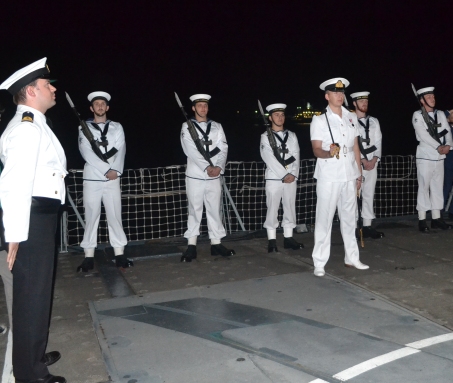
Onboard HMS Lancaster
Lt Cdr Thomson, who has been with HMS Lancaster for two years, commented:
“This is part of our nine month deployment, during which we carry out a number of different roles around the globe – part of which is reassurance to the UK Overseas Territories.
“Typically we have about 175-180 crew on board and when we deploy that rises to up to 210 additional personnel that we take with us as we work on ourdeployments.
“HMS Lancaster is traditionally an Anti-Submarine Warfare ship, one of the three roles we operate, along with Maritime Security and Defence Engagement and Reassurance.”
HMS Lancaster also carries the advanced maritime attack helicopter, Wildcat, which many Island residents will have seen in flight, conducting reconnaissance and aerial footage of the Island before becoming (on Wednesday) the first ever rotary aircraft to land at St Helena Airport. The Wildcat will also be landing at Francis Plain on Friday morning to collect Governor Capes for a visit on board HMS Lancaster at sea.
Prior to her departure from St Helena on Friday morning HMS Lancaster will conduct a high speed ‘Steam Past’ across James’ Bay to bid farewell to the Island.
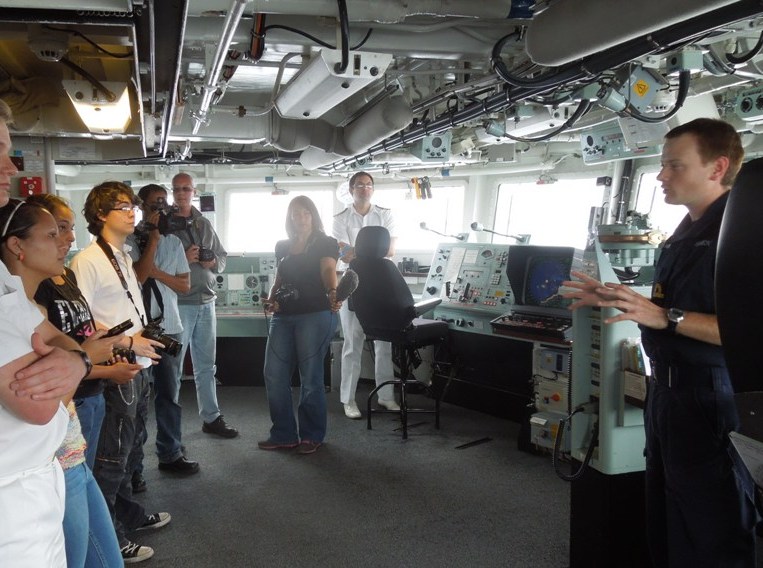
Local Media at HMS Lancaster Bridge
HMS Lancaster still has a busy eight-week program ahead, conducting engagement operations in West and North Africa, the Gulf of Guinea and Cape Verde Islands. The ship will then head back to the Mediterranean and Gibraltar before returning to the UK one week before Christmas.
HMS Lancaster’s next major deployment will be in 2017.
SHG
15 October 2015
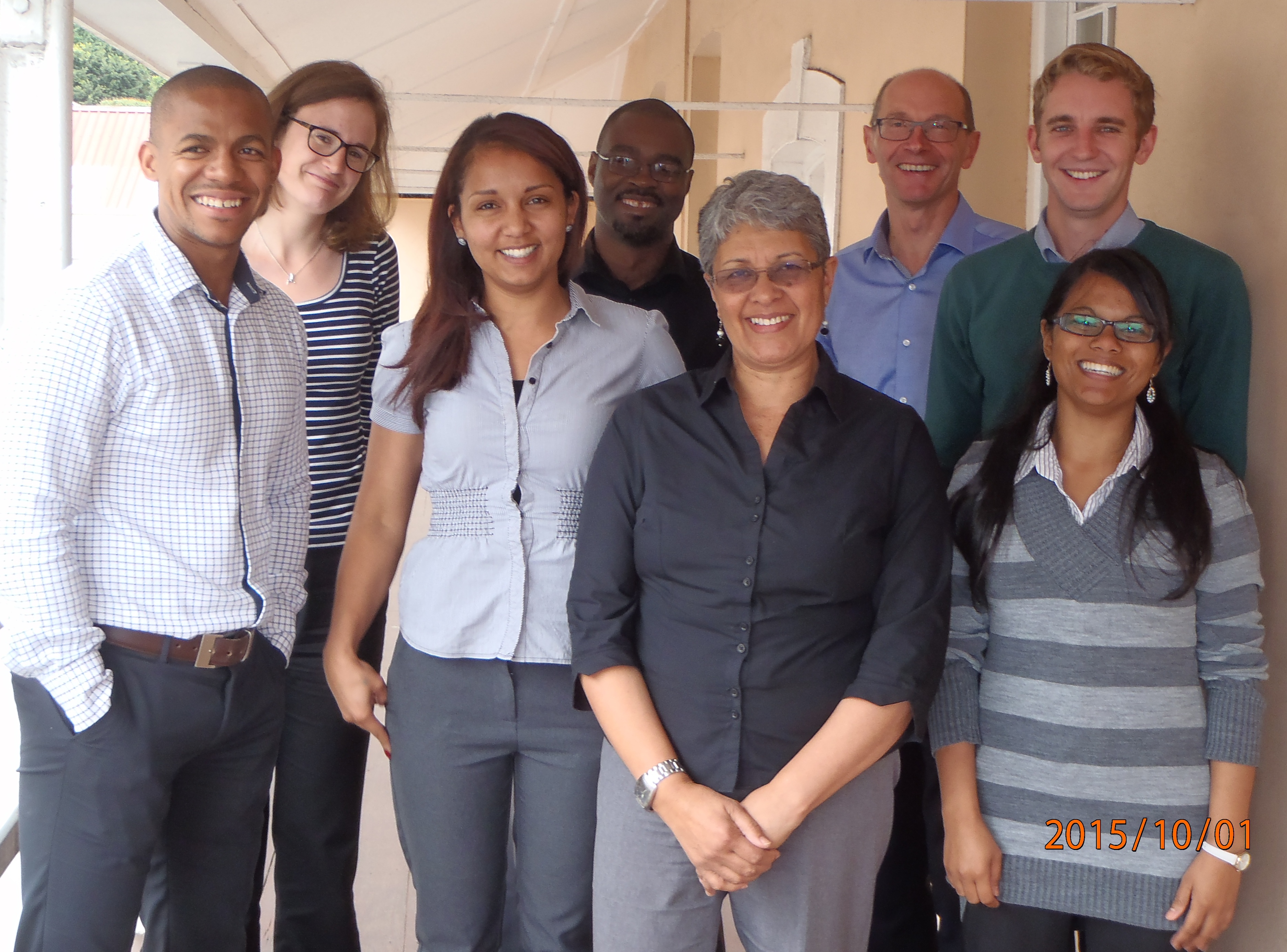
Audit Team
Liz March (commonly known as Vilma) retired from the St Helena Audit Service on Monday 12 October 2015 after completing 25 years of service with the Audit team and 44 years with St Helena Government. Liz began her career in the Public Health Directorate in 1972, and then the Government Secretariat – before moving to the Audit Office in 1990.
Chief Auditor, Phil Sharman said:
“I had the pleasure of working with Liz during my first term on the Island in the 1990s and again in my current contract on St Helena as Chief Auditor. The Chief Auditor holds a constitutional position with statutory responsibility for the external audit of the accounts of government and other public bodies and promoting good governance, stewardship and accountability across the sector. As a Senior Auditor, Liz was a respected and experienced member of the audit team and has given loyal service to the Office of the Chief Auditor throughout the past 25 years.”
Liz initially worked for the St Helena Audit Service as an Examiner of Accounts before being promoted to Senior Auditor. In wishing her well in retirement, the audit team (pictured) invited Liz and her husband Vince March, to a dinner at Farm Lodge.
SHG
13 October 2015
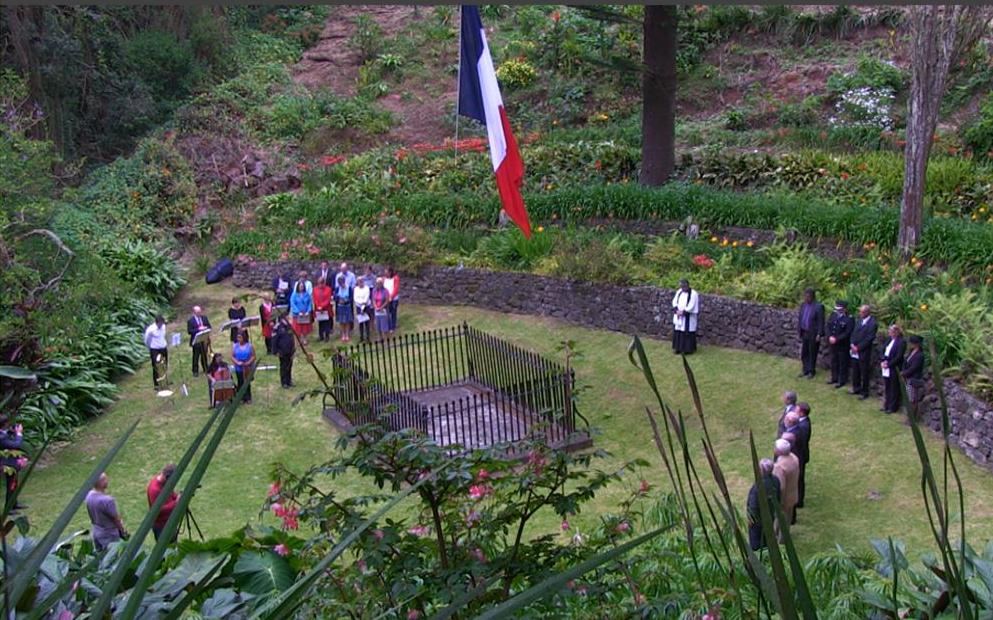 A Bicentennial Commemoration of Napoleon’s exile to St Helena took place at Napoleon’s Tomb on Sunday 11 October 2015 at 3pm (pictured).
Father Dale Bowers led the Commemoration with Prayers, followed by a one minute silence signalled by the playing of Aux Mort’s by Pastor Graeme Beckett.
The UK and French National Anthems were then sung by choirs Bug Eye Tuners and Palm Villa Singers, accompanied by brass band Brass Monkeys.
The anthems were followed by the Laying of the Wreaths, led by His Excellency the Ambassador Jean Mendelson, representing the Minister of Foreign Affairs and International Development of the French Republic, His Excellency Governor Mark Capes, M. Victor-Andre Massena, Prince d’Essling and President of the Napoleon Foundation, M. Jean Etevenaux, Vice-President of the Souvenir Napoléonien and representatives from the Companions de l’Aigle.
Shelby Bargo, Jade Leo and Teeny Lucy drew the ceremony to a close with a musical recital on strings.
This year (2015) commemorates 200 years since Napoleon’s exile to St Helena. He arrived at St Helena on 15 October 1815, after ten weeks at sea aboard HMS Northumberland.
SHG
12 October 2015
Two Royal Navy vessels, Type 23 Frigate HMS Lancaster and fuel tanker RFA Gold Rover, arrived at St Helena this afternoon, Monday 12 October 2015 – preceded by a flyover by HMS Lancaster’s Wildcat helicopter over James’ Bay.
The Navy vessels are visiting the Island to take part in the bicentennial anniversary of Napoleon’s arrival to the Island in 1815. St Helena is looking forward to providing a warm welcome to the Royal Navy and a busy programme of events has been drawn up by the Governor’s Office.
Events planned include a call on the Governor by Commanders of both ships, a visit to the Hospital, various sporting activities and tree planting with the Millennium Forest Community Project. HMS Lancaster will host various activities on board including an invited evening reception and a capability demonstration. Crew members from both ships will participate in bicentennial activities, including attendance at a reception at Longwood House and at the Briars Pavilion.
In addition to these events, there will also be tours onboard HMS Lancaster for schoolchildren, the media and French visitors. Royal Navy teams will also be competing in golf, football and basketball events, playing against Island teams.
As part of the commemorations, ships’ personnel will parade at a ceremony at Napoleon’s Tomb on Thursday 15 October 2015 at 10am – when the Commanders of HMS Lancaster and RFA Gold Rover, accompanied by HE Governor Capes, French Ambassador Jean Mendelson and Prince d’Essling – will commemorate the funeral of Napoleon with the laying of wreaths at the Tomb.
HMS Lancaster’s advanced maritime attack Wildcat helicopter will fly a number of operations on Wednesday afternoon, including deployment over Napoleonic sites, and landings at Francis Plain and St Helena Airport. In this way, HMS Lancaster’s Wildcat helicopter will become the second aircraft ever to land at St Helena Airport.
While at St Helena, HMS Lancaster will also support the St Helena Sea Rescue team with First Aid and Sea Rescue training exercises. Personnel will also be attending St Luke’s Night at St James’ Church on Thursday evening.
At 11am on Friday, HMS Lancaster will conduct a special high speed steam past, across James’ Bay, to bid farewell to St Helena.
RFA Gold Rover will depart the Island on Thursday evening at around 7pm, followed by HMS Lancaster on Friday, 16 October 2015.
SHG
12 October 2015
A Sub-committee of the Economic Development Committee has today been established to carry out an independent review of the current provision of media services on St Helena – assessing the market, viability and long term sustainability of the current offering. With their cooperation, the media services offered by South Atlantic Media Services Limited (SAMS Radio and the Sentinel newspaper), Saint FM Community Radio and The Independent newspaper, will naturally be incorporated into the review.
The Sub-committee’s membership is as follows:
- Councillor Pamela Ward Pearce (Chair)
- Joan Peters
- Dr Niall O’Keeffe
- Thomas Holvey
- Ethel Yon OBE
The Secretary to this Sub-committee is Miss Anita Legg.
The group will meet approximately once each month, calling additional attendees and members of the Island’s media organisations as appropriate to draw on local expertise – seeking information and views on the current media services provided on St Helena.
The group will aim to produce its report within six months of appointment. The Sub-committee is a ‘task and finish’ group, formed with just one task – to review the current viability and sustainability of the local media on St Helena. Once it has completed this task, it will be disbanded.
SHG
12 October 2015
CANCER AWARENESS MONTH
Cancer is a condition where cells in a specific part of the body grow and reproduce uncontrollably. The cancerous cells can invade and destroy surrounding healthy tissue, including organs. Cancer sometimes begins in one part of the body before spreading to other areas – a process known as metastasis. There are over 200 different types of Cancer, each with its own methods of diagnosis and treatment.
Spotting Signs of Cancer
Changes to your body’s normal processes or symptoms that are out of the ordinary can sometimes be an early sign of cancer. For example, a lump that suddenly appears on your body, unexplained bleeding or changes to your bowel habits are all symptoms that need to be checked by a doctor. In many cases, your symptoms won’t be related to cancer and will be caused by other, non-cancerous health conditions. However, it’s still important for you to see your doctor so that they can investigate your symptoms.
Reducing Your Risk of Cancer
Making some simple changes to your lifestyle can significantly reduce your risk of developing cancer. For example, healthy eating, taking regular exercise and not smoking will help lower your risk. Please contact the Health Promotion Team if you would like any advice or support (see contact details below).
Cancer Treatment
Surgery is the primary treatment option for most types of cancer, because solid tumours can usually be surgically removed. Two other commonly used treatment methods are chemotherapy (powerful cancer-killing medication) and radiotherapy (the controlled use of high-energy X-rays).
This month, as part of the Cancer Awareness Campaign, we are focusing especially on Lung Cancer.
Lung Cancer is one of the most common and serious types of cancer.
There are usually no signs or symptoms in the early stages of Lung Cancer, but many people with the condition will eventually develop symptoms including:
- a persistent cough
- coughing up blood
- persistent breathlessness
- unexplained tiredness and weight loss
- an ache or pain when breathing or coughing
You should see your doctor if you have any of these symptoms.
Who is Affected?
Lung Cancer mainly affects older people. It is rare in people younger than 40, but the rates of Lung Cancer rise sharply with age. Although people who have never smoked can develop Lung Cancer, smoking is the main cause (about 90% of cases). This is because smoking involves regularly inhaling a number of different toxic substances. Lung Cancer is most commonly diagnosed in people aged 70-74 years. If you are interested in giving up smoking and would like advice and support, please contact the Health Promotion Team (contact details below).
Treating Lung Cancer
The treatment for Lung Cancer depends on the type of cancer, how far it has spread and how good your general health is. If the condition is diagnosed early and the cancerous cells are confined to a small area, surgery to remove the affected area of lung is usually recommended. If surgery is unsuitable due to your general health, radiotherapy to destroy the cancerous cells may be recommended instead. If the cancer has spread too far for surgery or radiotherapy to be effective, chemotherapy is usually recommended.
Outlook
As Lung Cancer does not usually cause noticeable symptoms until it has spread through much of the lungs or into other parts of the body, the outlook for the condition is not as good as many other types of cancer. Overall, about 1 in 3 people with the condition will live for at least a year after they are diagnosed and fewer than 1 in 10 people will live for at least five years. However, survival rates can vary widely depending on how far the cancer has spread at the time of the diagnosis. Early diagnosis can make a big difference.
Do remember though, as with all health problems, prevention is better than a cure and as stated above, eating healthily, maintaining a healthy weight, stopping smoking and taking regular exercise can help to prevent many cancers developing in the first place.
For further information, contact Marian Kanes, Health Promotion Trainer at hp.trainer@publichealth.gov.sh, or Marian Yon, Health Promotion Coordinator at marian.yon@publichealth.gov.sh.
Marian Kanes
Health Promotion Trainer
SHG
12 October 2015
FROM THE ARCH IN JAMESTOWN – SUNDAY 18 OCTOBER
The Highways Authority has given approval for the road to be closed from the Arch in Jamestown to the Seafront on Sunday 18 October 2015. This is to enable the Roads Section to carry out essential road rehabilitation and resurfacing work.
The road will be closed from 7am to 4pm.
Diversion signs will be in place and, as normal, only vehicles of the Emergency Services will be granted access.
Pedestrians will still be able to access the seafront via the terrace and steps adjacent to the Passenger Terminal.
The Roads Section would like to apologise for any inconvenience caused, and thank the public in advance for their continued understanding and cooperation.
SHG
12 October 2015
GREEN HILL TO PERKINS GUT ROAD CLOSURE
Waste Management Services advises residents, affected by the Green Hill to Perkins Gut road closure, that three brown wheelie bins will be placed at Sandy Bay Junction (near the telephone box) for their domestic waste disposal.
Residents are requested to use these bins for their domestic waste, which will then be emptied on the usual day for domestic waste collection in the Sandy Bay area, i.e. on a Wednesday.
Residents requiring further information can contact the Environmental Risk Manager, Mike Durnford, on tel: 24724 or via email mike-durnford@enrd.gov.sh.
SHG
12 October 2015