Rising Prices and What They Mean for St Helena
We know that rising prices are causing real concern across St Helena. Households are seeing the effect on everyday costs, while businesses are facing higher fuel, freight and operating costs. Government is listening to these concerns, monitoring the pressures closely and taking action to soften their impact where public finances allow.
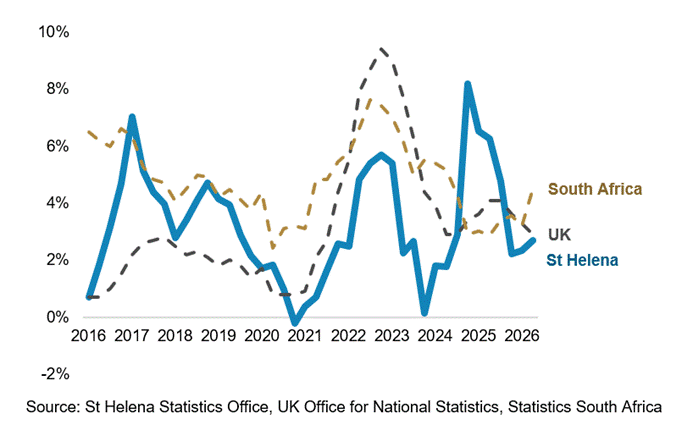
The latest published figures from the Statistics Office show that prices rose by an average of 2.7% in the year to March 2026. This is an average across a range of goods and services, so it will not reflect every household’s experience. Over the same period, household energy prices increased by 8.5%, food prices increased by 2.2%, and communications prices, including internet, phone and data, did not change.
Because St Helena imports many goods from the UK and South Africa, price changes in those countries affect costs here. Figure 1 shows that inflation in St Helena broadly follows trends in both countries. Inflation has fallen from the peaks seen in 2022, but pressures remain. South African inflation rose from 3% in February 2026 to 5% in June, while UK inflation remains above the Bank of England’s 2% target. The outlook remains uncertain and will continue to be monitored.
Figure 1. Headline inflation in St Helena, the UK and South Africa, 2016-2026
The present pressures have several causes, including disruption to global supply chains, the continuing effects of the COVID-19 pandemic and international conflict. These factors have increased the cost of food, fuel, freight and other imports on which St Helena depends.
Why higher oil prices matter
Figure 2. Price of Brent crude oil in 2026, US dollars per barrel
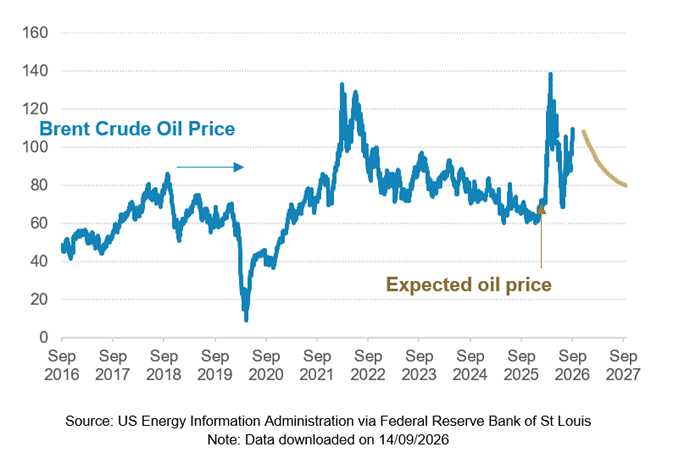
Global oil prices have been volatile during 2026 as conflict involving Iran has disrupted markets. Although prices fell during the ceasefire period, they remain above pre-conflict levels. This affects the cost of fuel imported to St Helena which in turn can also increase freight, electricity and transport costs.
No one can predict oil prices with certainty. The 2026/27 Budget included an allowance for higher prices, and current market forecasts suggest prices may ease during 2027. However, renewed or prolonged conflict could delay or reverse that fall. Government will therefore continue to monitor oil prices and the effect on local costs.
What Government is doing now
Government cannot prevent international price rises from reaching St Helena, but it can take practical steps to limit some of the impact, support household incomes and protect essential services.
We are taking these pressures seriously. Ministers will continue to review price data, fuel and freight costs, and the effect on households and businesses. We will also continue listening to the concerns raised by the community and will adjust our response where there is clear evidence of need and an affordable, effective option.
Action already taken includes:
Electricity. The electricity tariff has increased by 1p per kilowatt-hour rather than the 3p increase that would otherwise have been required. Government has allocated £172,000 through the Fuel Risk Share mechanism to limit the increase for consumers.
This support is in addition to the existing £1.5 million annual subsidy to Connect St Helena Ltd, which helps keep utility charges below the full cost of providing the services.
Freight. Changes to the shipping schedule are helping to limit the effect of higher fuel costs on sea freight. Because most goods arrive by ship, containing freight costs helps reduce pressure on the price of imported goods into the Island.
Air travel. SHG and Airlink have agreed a way to adjust ticket prices when aviation fuel prices change. Although this has resulted in a modest ticket increase, SHG continues to absorb most of the additional fuel cost. This supports residents who need to travel, Saints returning home, visitors and the wider tourism economy.
Government is also paying more for fuel, imported materials, supplies, freight and public services. Where budgets allow, these increases are being absorbed rather than automatically passed on through higher public charges. This is another way of limiting the pressure on households and businesses.
Government also continues to subsidise public transport, air access, the ferry service, firewood and other essential services. These subsidies help keep the prices paid by the public below the full cost of providing the services.
Further support for households
Keeping some prices down is only part of the response. Increasing incomes and providing targeted support can also help households meet everyday costs.
Support for workers
The minimum wage is an important way of supporting people on lower incomes. It has increased by more than inflation since 2023, as shown in Figure 3.
Figure 3. Annual percentage change in prices and the minimum wage, financial years 2020-2025
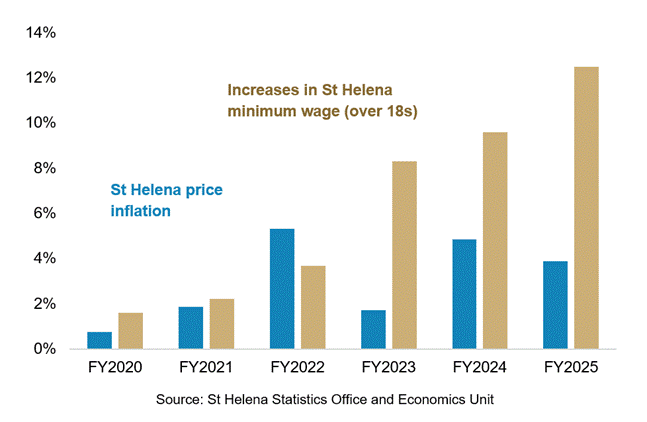
In July 2026, the minimum wage increased to £4.85 per hour for people aged 18 and over and £3.83 per hour for those under 18. This was another above-inflation increase, helping to protect the spending power of lower-paid workers. The decision followed consultation with employers, employees, the Chamber of Commerce and other stakeholders.
Support for families with young children
A Child Benefit payment will be introduced from November 2026 to support eligible resident families with young children. Families face costs not only for food and energy but also for infant products and childcare. The payment will apply to children aged 0-5 who have not started full-time primary school. It will be £15 per child per week in Year One, rising to £20 per child per week in Year Two. Further information on eligibility and how to apply will be published before the scheme begins.
Supporting older people’s mobility
Government will introduce concessionary Public Transport Service (PTS) fares for people aged 70, recognising the importance of affordable transport in helping older people remain mobile and connected. Changes to the PTS – which also include additional and seasonal journeys, clearer timetables, and lower Hop On Hop Off fares – come into effect on the 1st October 2026. A press release with additional information can be found on the SHG website.
Continuing work to protect living standards
Government will continue to support living standards through expenditure on healthcare, air access, public transport, the Basic Island Pension, Income Related Benefit, and agriculture and fishing subsidies.
During 2026/27, Government will review customs duties in the context of the cost of living. Work on the telecommunications licensing framework will consider how it can better serve consumers in St Helena.
The prices of household energy and communications, which together make up around 15% of the Consumer Price Index basket, are regulated. The Fuel Risk Share mechanism will also continue to help manage the effect of fuel prices on electricity tariffs.
Government cannot completely shield households and businesses from world events. However, protecting living standards is a central priority, and this work will continue beyond the 2026/27 Budget.
If oil prices rise further, Government will assess additional options. Any further support will need to be affordable, effective and targeted as fairly as possible.
Reducing St Helena’s future vulnerability
Immediate support matters, but St Helena must also reduce its exposure to international price increases. Government’s longer-term work includes:
Supporting agriculture. Increasing local food production to reduce dependence on imports, freight and exchange rates.
Energy. Expanding renewable energy generation and storage to reduce dependence on imported diesel and give the Island more control over future energy costs.
Telecommunications. Progressing the proposed telecommunications upgrade so St Helena can make better use of the Equiano cable, improve services and introduce a modern regulatory framework with stronger consumer protection.
Housing. The availability and cost of suitable housing has a direct impact on household budgets, which is why work to improve Government housing and increase affordable housing options also forms part of the wider effort to improve living standards.
These projects will take time and will not reduce this week’s shopping bill. They are nevertheless essential if St Helena is to become less vulnerable to future international price shocks.
There is no single answer to the cost-of-living pressures facing St Helena. Government will continue to listen, publish clear information and act where it can: supporting people through immediate pressures while making the changes needed to build a more resilient Island for the future.
#StHelena #Costofliving #Risingprices