
The Health and Social Care Portfolio (HSC) is exploring options to deliver a selective influenza (flu) vaccination campaign later this year. Members of the public are being asked to register their interest to ensure that enough vaccines are ordered ahead of the Northern Hemisphere (e.g. United Kingdom) flu season, which typically peaks in December or January.
Only some groups of people will be eligible to receive the flu vaccine, these include:
- All people aged 65 years or older
- People who are the main carer of an older or disabled person
- People who are living with someone with lowered immunity
- People aged 6 months or older with certain underlying medical conditions
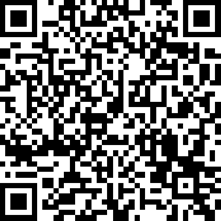
People belonging to one or more of these groups are invited to register their interest in receiving the flu vaccine by completing an online form which can be accessed at the following link – https://www.surveymonkey.com/r/shflu or by scanning the QR code below with a smartphone.
If needed, someone else can complete this online form for you.
Alternatively, you can register your interest by calling the Health Promotion team on 25949 or emailing healthpromotion@sainthelena.gov.sh.
Children and young people aged up to 16 years, pregnant women, people living in a residential or nursing home, and frontline health and social care workers are also invited to receive the flu vaccine. However, these groups do not need to register their interest as enough vaccines will be ordered for everyone in these groups.
It is not yet certain that flu vaccines will be available from the global market. The public will be informed in due course as to whether the campaign will go ahead later this year.
QR Code
About flu
Flu is a common viral illness. Common symptoms include a fever or high temperature, chills, tiredness or weakness, a headache, aches and pains, a dry cough and sore throat, a runny or blocked nose, sneezing, and diarrhoea or tummy pain.
You can catch flu all year round, but it is especially common at certain times of the year. In St Helena, flu is usually more likely to be spread by people arriving from the Southern Hemisphere (e.g. South Africa) in May and June and from the Northern Hemisphere (e.g. the United Kingdom) in December or January.
You can catch flu many times because flu viruses change regularly. Your body won’t have natural resistance to new versions. Flu vaccines are designed to protect you against the current strains of the virus.
Flu often gets better on its own within a few days, but it can become very serious – there was a small number of deaths due to flu infection in St Helena last year.
Certain groups are at greater risk of serious illness – it is important that you receive the flu vaccine if you are advised to do so.
You can prevent the spread of flu by:
- washing your hands regularly with soap and warm water
- cleaning surfaces like your keyboard, telephone and door handles regularly
- use tissues to cover your mouth and nose when you cough or sneeze
- bin used tissues as soon as possible
- stay off work or school until you’re feeling better
You can treat mild cases of flu at home by:
- getting plenty of rest and sleep
- keeping warm
- drinking lots of water to avoid dehydration
- taking paracetamol or ibuprofen to lower your temperature and treat aches and pains
You should seek medical attention if you:
- are more short of breath than usual
- have pain when breathing or coughing
- are feeling confused, dizzy or lightheaded
- are feeling sick and cannot keep food or fluids down
- have a very high or low temperature
- are peeing less than usual – this can be a sign of dehydration
- are coughing up blood