
A Walk-Through History
For an island so small and remote, St Helena has played host to a remarkably large number of influential figures throughout its history. Some visitors are remembered for their positive contributions to the world, while others are perhaps more infamous than famous.
As part of the UK Government funded Tourism Development Programme, an interpretative art installation titled A Walk Through History has been installed to showcase some of the island’s notable visitors. The installation features an initial 28 plaques commemorating internationally significant figures who have visited St Helena since its discovery.
Set along one of Jamestown’s most historic areas, the walk presents St Helena’s rich and varied past in chronological order, allowing visitors to experience its story as they move through the space.
To complement the plaques, and to encourage a relaxing feel, the area has been beautified with trellised seating and planters.
Location and Site Description
The Castle Terrace wall in Jamestown has been identified as the ideal setting for the installation. This important heritage structure has been underutilised in recent years and, at times, affected by antisocial behaviour, particularly at night.
By introducing a prominent visitor attraction, the project aims to increase positive foot traffic and encourage greater use of the area. Enhanced lighting will further improve safety and security.
The Walk also strengthens links between key nearby attractions, improving access from the Wharf to Castle Gardens and surrounding businesses. The site is sheltered from extreme weather, pedestrian-friendly, and restricted to emergency and maintenance vehicles only.
Importantly, there are no entrance barriers, allowing both residents and visitors to enjoy the installation at any time.
The Dolphin Stone
Beautification efforts extend beyond the Terrace. Near the Castle arch lies the Dolphin Stone Garden, a small but historically significant space that is often over-looked.
Recent improvements have gently enhanced the garden, drawing attention to the remarkable story of the Dolphin Stone itself. At the centre is a stone inscribed in 1645 by the crew of the British ship Dolphin during their voyage to Europe. At that time, St Helena served as a mid-Atlantic crossroads for ships of all nations.
Long before the first official Post Office in 1815, this stone acted as a simple but effective postal exchange. Sailors would leave letters beneath it or at the island chapel, trusting that other vessels would collect and deliver them to their final destination.
To further highlight this unique feature, a discreet spotlight will be installed, allowing the historic inscription to be clearly seen and appreciate after dark.
While the garden is small, it is a meaningful place of connection that represents the island’s global maritime past. It enhancement reflects the importance of preserving St Helena’s heritage, ensuring that these stories are not lost over time. By continuing to care for and thoughtfully develop such sites, renewed awareness and appreciation of the island’s history can be fostered.
Repainting of the Church Lane Arch
The repainting of the Church Lane Arch forms part of ongoing efforts to enhance the visual character of Jamestown while celebrating its historic layout. Leading into Church Lane, a traditional rear access route behind St James’ Church, the arch marks an area that once played an important role in the town’s day-to-day life. Enhancements like this help present Jamestown as a place that values both its heritage and its appearance, creating a more inviting and visually appealing environment.
St Helena Tourism is confident that the community will take pride in and help protect these shared spaces for everyone to enjoy.
Photos
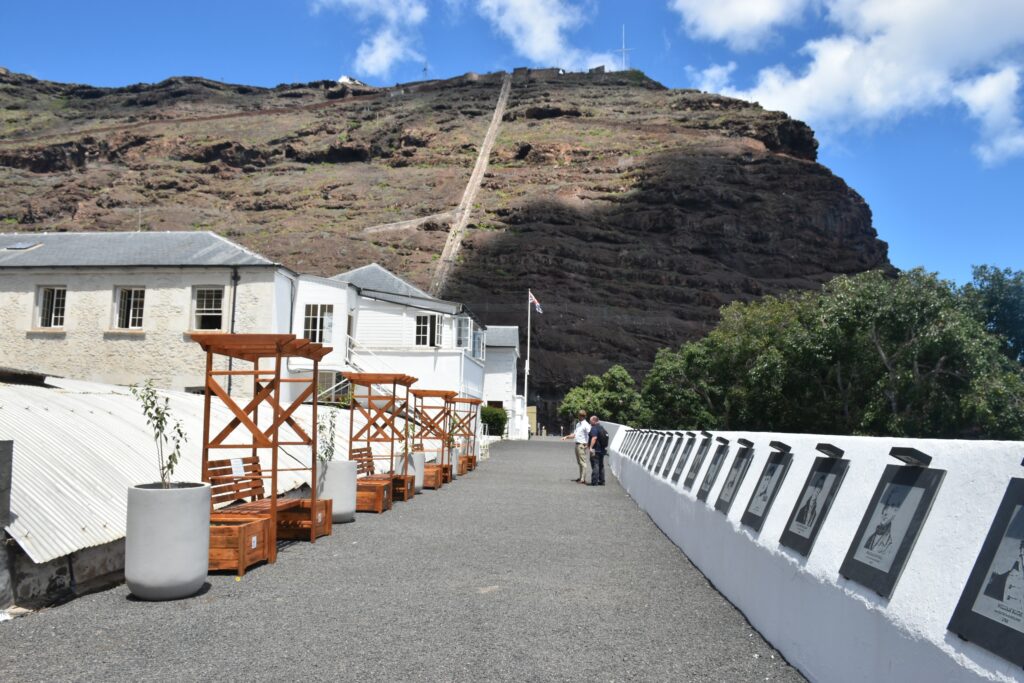
Newly installed benches and interpretative art installation at the Castle Terrace wall in Jamestown
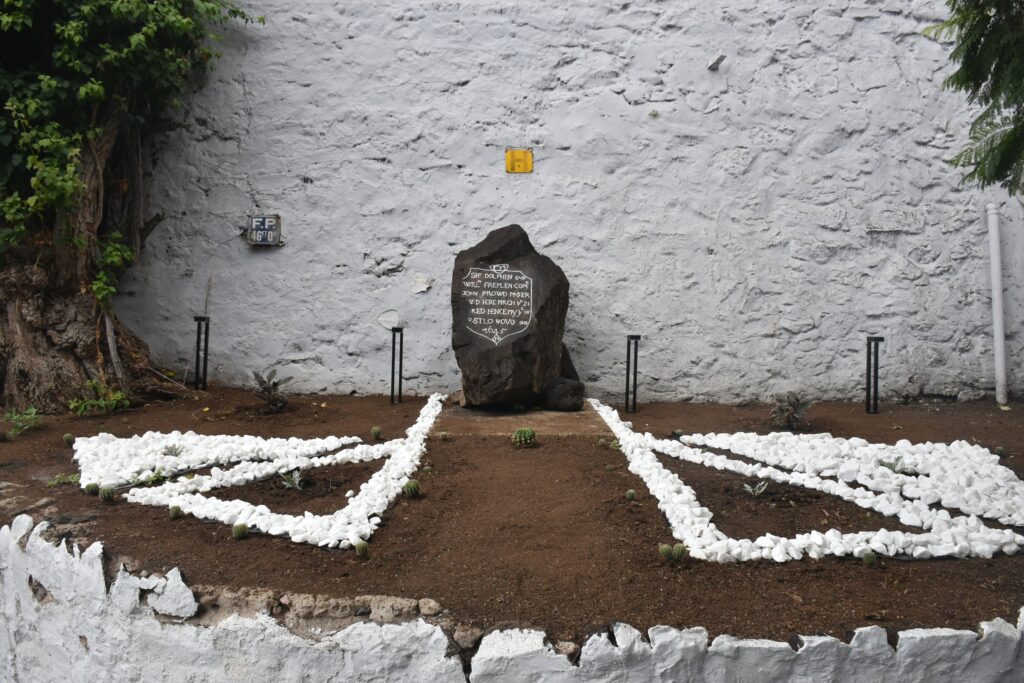
The Dolphin Stone
#StHelena #AWalkThroughHistory #Installation