
Latest Posts
The St Helena Sea Rescue recently marked a major milestone in maritime safety with the official blessing and naming ceremony of its newest rescue vessel, Apex. The acquisition of the vessel was made possible through UK Government funding from the Maritime and Coastguard Agency (MCA).
The ceremony was hosted by Sea Rescue Manager, Leeroy Caswell and attended by key dignitaries, including Her Excellency Governor Belinda Lewis, Bishop Dale Bowers, the Chief Minister, Honourable Ministers, Honourable Members, and invited guests.
The event featured a special welcome to Graeme Harding, Head of Fleet and Facilities at the National Sea Rescue Institute (NSRI), who travelled to the island to conduct training with the local rescue team and oversee the official handover of the new craft.
Following remarks by Acting Portfolio Director Derek Henry and Governor Lewis, Bishop Dale delivered a formal blessing over Apex. Governor Lewis then performed the traditional christening by breaking champagne over the vessel and officially declaring its name.
Following the naming ceremony, Governor Lewis and her children joined the Sea Rescue team for an inaugural trial run aboard Apex.
The addition of Apex enhances St Helena Sea Rescue’s operational capabilities, ensuring the volunteer and professional crew remain well-equipped to respond to emergency calls around the island’s waters.
MCA Overseas Strategic Programme Manager, Elise Carlo, commented:
“The MCA is delighted to have supported St Helena in bringing APEX into service, made possible through our Overseas Support Programme funding from the FCDO’s Resilient Economies Programme. This new, purpose-built vessel represents an important investment in St Helena’s search and rescue capability, providing Sea Rescue with a modern and capable platform to respond to incidents and help keep people safe at sea. We are proud to see APEX officially named and launched and look forward to the important role she will play in supporting the safety and resilience of the island community.”
Minister for Safety, Security and Home Affairs, Gillian Brooks, added:
“Having this new vessel is a significant investment in the safety and well-being of our community, strengthening our ability to respond to emergencies at sea and protect those who depend on these vital services. Sincere gratitude and thanks are extended to all who worked to get a new vessel for our service, and to the MCA, who has so generously financed this vessel for us. My appreciation goes to the Sea Rescue crew for their dedication and commitment to saving lives at sea. Together, you are strengthening the ability to protect lives and serve our community.”
Photos
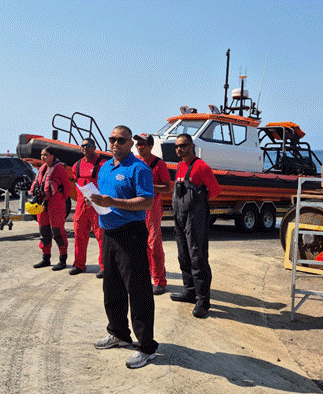
Sea Rescue Manager, Leeroy Caswell, welcomed dignitaries and guests
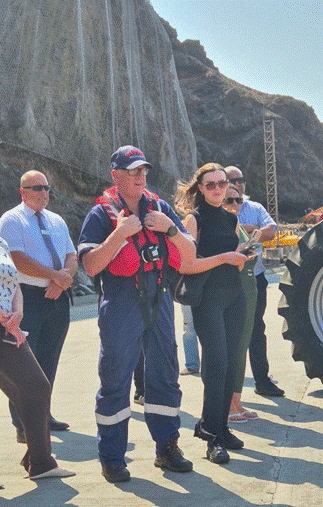
Trainer, Graeme Harding (centre)
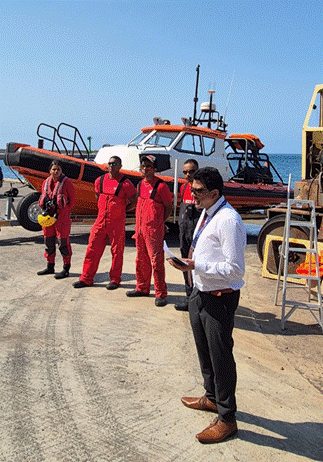
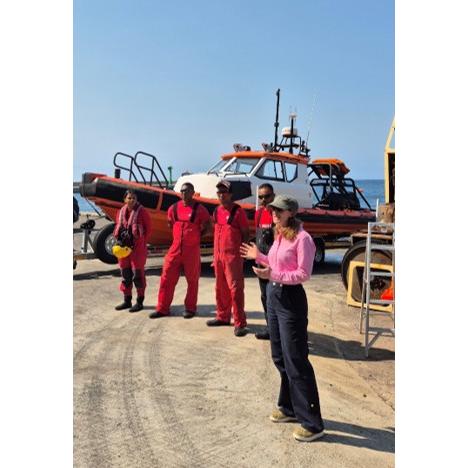
Acting Portfolio Director for Safety, Security and Home Affairs (SSHA), Derek Henry, and HE Governor Belinda Lewis delivered remarks
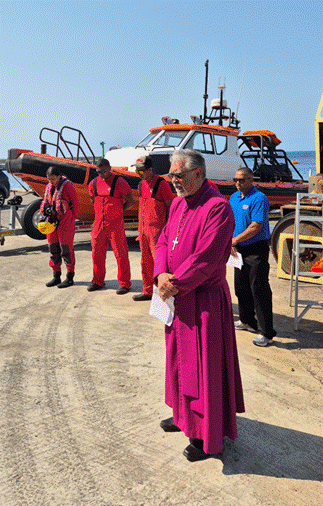
Bishop Dale Bowers delivered a blessing over ‘Apex’
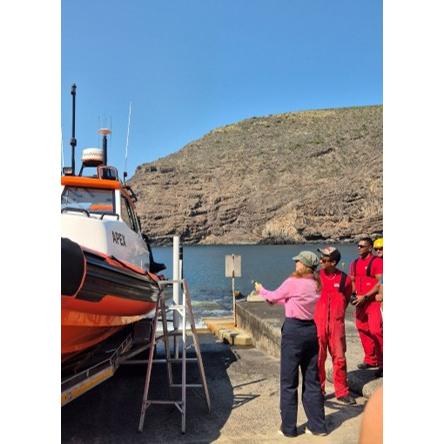
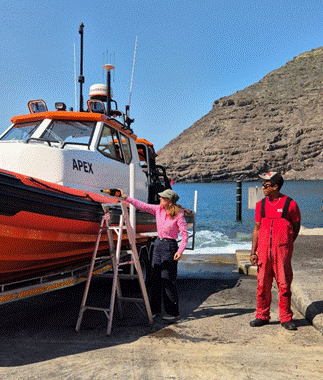
Governor Lewis ‘christening’ the new boat
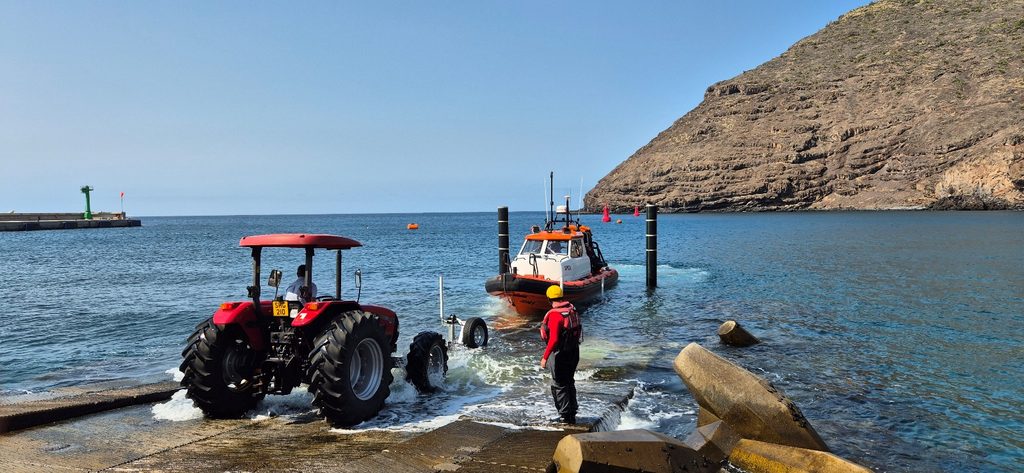
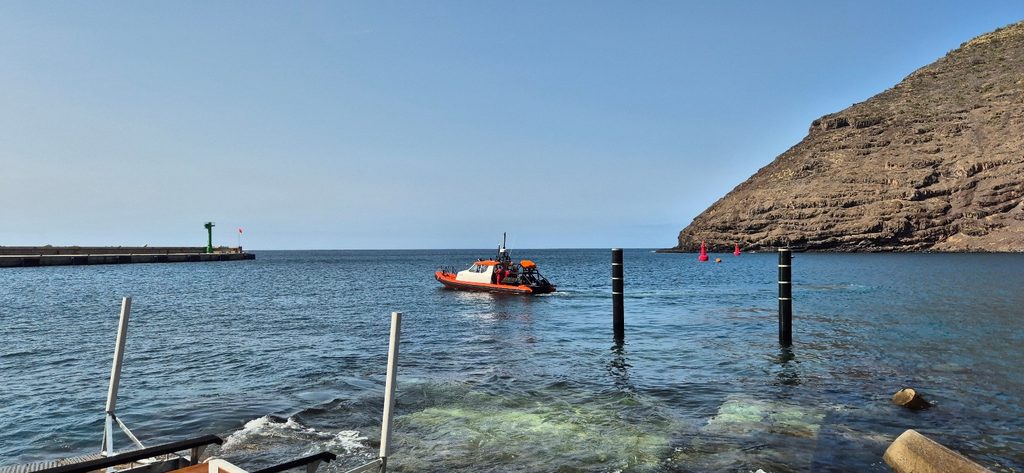
The Apex officially launched
#StHelena #SeaRescue #MCA
At their meeting on 22 September 2026, Executive Council approved the Merchant Shipping (Registration of Ships) Regulations 2026. The new Regulations set out the rules for registering ships under the St Helena flag and are an important step in the development of the St Helena Ship Registry.
What Do The Regulations Do?
The Regulations govern how ships are registered in St Helena. They set out who may own a registered ship, how ownership and mortgages are recorded, the certificates a ship must hold, and the powers of the Registrar of Ships. The Regulations are closely modelled on the equivalent United Kingdom regulations, so eligible vessel owners and their advisers will be familiar with the compliance requirements.
Why does St Helena Have A Ship Registry?
St Helena has operated a Ship Registry for many years as part of the Red Ensign Group – the family of British registries which includes the United Kingdom, the Crown Dependencies and the Overseas Territories. Ships on the St Helena Register fly the Red Ensign.
In June of this year, Executive Council approved the continuation and development of the Ship Registry. The benefits to St Helena are:
1. Income. The Ship Registry generates a net benefit for the St Helena Government. A cost-benefit analysis considered a range of operating scenarios over the next 10 years. It indicates that the Registry is expected to deliver a net benefit to the Island after all costs have been met.
2. Wider economic value. St Helena’s registered fishing vessels operate in the South Atlantic under licence. The Government of South Georgia and the South Sandwich Islands has confirmed that these vessels make an important contribution to the South Georgia fisheries.
3. Standing. Operating a registry that meets international standards supports St Helena’s reputation as a well-regulated jurisdiction and sits alongside the wider work to develop financial services and the company registry.
4. Skills and jobs. As the Registry grows, so does the need for local expertise in maritime administration, survey and inspection work.
Safety And Standards
Operating a Ship Registry carries significant responsibilities. As a Flag State, St Helena is responsible for the safety of ships that fly its flag and the welfare of the people who work on them. The development project now underway reflects that responsibility. St Helena is strengthening its Maritime Authority to ensure proper oversight of ships on its Register.
What Happens Next
The Regulations are the first major milestone in a 12-month development project agreed with the United Kingdom’s Maritime and Coastguard Agency (MCA). The project is overseen by a joint Project Board with the Agency, and the remaining work includes:
- Appointing a qualified surveyor so that St Helena can conduct and oversee inspections and surveys and issue certificates;
- Putting agreements in place with recognised organisations to carry out survey work on the Registry’s behalf;
- Ensuring there are further regulations to apply international conventions covering protecting the marine environment and conditions of work in the fishing industry; and
- Strengthening the staffing, systems and procedures of the Maritime Authority.
Local Boats Are Not Affected
The Regulations apply to the International Ship Register only. They do not change current arrangements for local boat owners. There is no intention to bring local vessels onto the Ship Register unless their owners wish to do so. Local vessels will continue to be dealt with under separate arrangements.
Minister for Safety, Security and Home Affairs, Gillian Brooks, said:
“Approving these Regulations is a significant step for St Helena. The Registry brings real income to the island and supports an important South Atlantic fishery, but it also carries a duty of care to every person working on a ship that flies our flag. This programme is about meeting that duty properly. I thank everyone whose work has brought us to this point, and I look forward to reporting further progress over the coming year.”
#StHelena #ShipRegistry #Maritime
In October 2026, advisers from the Hampshire Improvement and Advisory Service (HIAS) visited St Helena to strengthen literacy standards, assessment systems, and teaching leadership across primary and secondary schools. Their findings and recommendations are detailed in the report below.
Key Strengths and Progress
KS1 School
The most significant area of improvement is phonics. Teaching is now delivered with considerably greater commitment and confidence through the Read Write Inc. programme, supported by targeted one-to-one tutoring and improved assessment practices. Phonics Screening Check results have improved substantially, rising from 20% prior to the previous advisory visit to 68% in 2026, with current Year 1 progress indicating further improvement is likely.
Staff have also shown strong engagement with professional development in reading and writing. New assessment approaches have been introduced to strengthen understanding of reading progression, alongside practical strategies to support pupils across profiles identified within the Simple View of Reading.
KS2 School
School leaders have demonstrated a clear commitment to supporting struggling readers through the introduction of the Read Write Inc. Fresh Start intervention programme. Assessment and implementation planning arecomplete, and training has been delivered to staff to ensure a successful rollout.
Leadership has also shown strong dedication to enhancing overall reading provision, refreshing book stock and reviewing the wider English curriculum. Staff engaged positively with professional development focused on the effective deployment of teaching assistants and strategies to foster pupil independence.
Secondary School
The secondary school has recognised reading as a priority area and has begun preparations to implement Fresh Start for identified KS3 students. Initial staff training has established a foundation for intervention delivery and improved understanding of phonics-based reading support.
Priority Areas for Development
The next phase of improvement should focus on:
- Embedding effective support for pupils with additional educational needs through strengthened attention, communication and phonological awareness provision.
- Expanding access to high-quality decodable reading books and enriching library and reading environments.
- Developing a consistent whole-school reading culture, including reading for pleasure initiatives, reading spines (carefully curated, core lists of high-quality books, picture books, poetry, and non-fiction texts that every child is guaranteed to experience during their time at school) and stronger home-school engagement.
- Strengthening the connection between phonics, reading and writing to ensure pupils apply taught skills successfully in independent work.
- Implementing Fresh Start across KS2 and KS3, supported by robust monitoring and quality assurance.
- Continuing to build leadership capacity in English to secure sustainable improvement across all phases.
The visit confirmed that substantial progress has been made since previous advisory support, particularly in initial phonics provision and leadership. There is growing consistency in teaching practice, improved use of assessment, and a clear commitment from leaders to raising standards in reading and writing. The successful implementation of Fresh Start, the development of stronger reading cultures and continued investment in literacy leadership now represent the key opportunities to secure the next stage of improvement and achieve sustained gains in pupil outcomes across the St Helena Education Portfolio.
The St Helena Government (SHG) is launching a public consultation on a proposed Welfare of Adults Ordinance, the first St Helena law designed specifically to underpin the assessment and safeguarding of adults on the island.
The consultation will run for six weeks, from 27 October to 8 December 2026. Over that time, we will highlight key aspects of the proposals. Everyone is invited to respond, including families caring for loved ones, adults who need or may need care and support, voluntary and community groups, health and social care professionals, and anyone with a view on how St Helena should protect and support its most vulnerable people.
Why is a new law needed?
Children have been protected by the Welfare of Children Ordinance since 2008, but adults have no equivalent St Helena law. Adult social care relies on a 1990 UK Act, since replaced in the UK by the Care Act 2014, which was never designed for a small, remote island and sets standards St Helena cannot realistically meet. Local policies provide guidance but carry no legal force. As a result, there is no legal duty to assess adults in need, no legal rights for carers, no statutory Safeguarding Adults Board and no statutory right to independent advocacy.
Need is also growing. SHG’s Ageing Demographic Situational Analysis (November 2025) shows that St Helena has the second highest old-age dependency ratio in the world, after Japan, and that deaths (50–60 a year) far exceed births (under 20). Informal family support is declining, and around 90 residential care beds could be needed by 2036, double the current capacity of the Community Care Centre.
What is being proposed?
The recommended approach is a Welfare of Adults Ordinance adapted from the Falkland Islands’ Assessment and Safeguarding of Adults Ordinance 2020, a law already in force in a British Overseas Territory of comparable size and remoteness. It would include:
- a duty on Government to promote adult wellbeing;
- a duty to assess adults who appear to need care and support, and carers who need support, with written care plans reviewed at least annually;
- a legal duty to make enquiries where abuse or neglect is suspected;
- a statutory Safeguarding Adults Board, and Safeguarding Adults Reviews where things go seriously wrong;
- a right to independent advocacy for adults who find it hard to take part in decisions about their care; and
- written decisions with reasons, a right to request reconsideration, a right of appeal to the Supreme Court, and an accessible complaints procedure.
The law would not promise unlimited services. Eligibility for Government-funded care would be set out in regulations, taking account of the island’s resources and the support available from family and community. It would not take responsibility away from families but recognise and support the role they already play. No final decisions have been made, and this is a genuine opportunity to shape the law before it is drafted.
How to share your views
The consultation paper is available at https://www.sainthelena.gov.sh/st-helena/government/public-consultation/. Hard copies of the paper and response form are available at the Public Library and the Post Office. Please email Minister for HSC, Martin Henry, with your feedback as we want to hear about your experience and views.
The consultation closes at 16:00 on Tuesday 8 December 2026. All responses received will be considered, and a summary will be published afterwards.
#StHelena #WelfareofAdults #Consultation
A development application has been referred to Executive Council sitting as the Planning Authority. The Development Application is being referred to Governor in Council in accordance with the Direction issued on 14 June 2022 under section 23(1) of the Land Development Control Ordinance 2013 which requires the referral of applications for mining or other development or exploitation of minerals. This development would be for storage of explosives associated with the existing quarrying operation.
An open session meeting will take place in the Council Chamber on Tuesday 27 October 2026 commencing at 09:30 where Executive Council will consider the following application:
- Siting of two containers at Horse Point Quarry, Longwood North
Documentation for this meeting is available on the Executive Council page of the St Helena Government website via: www.sainthelena.gov.sh/government/legislative-council/executive-council/.
Members of the public who would like to view hard copies of the documents should contact the Secretary to Executive Council, Natasha Bargo, at the Castle by telephone on 22470 or via email through natasha.bargo@sainthelena.gov.sh.
Executive Council sitting as the Planning Authority comprises of Governor Belinda Lewis as Chair, Chief Minister Dr Rebecca Cairns-Wicks and Ministers Martin Henry, Gillian Brooks, Andrew Turner and Karl Thrower. The Attorney General is a non-voting member of Executive Council.
#StHelena #ExecutiveCouncil #PlanningProposal
www.facebook.com/StHelenaGovt/
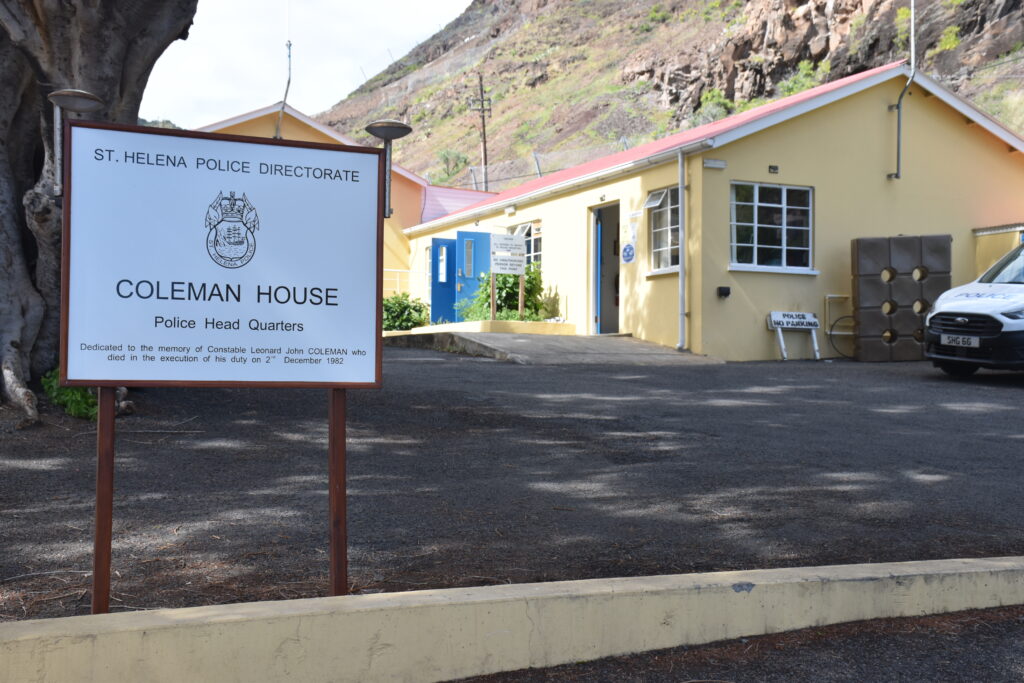
A meeting of the Police and Crime Panel will take place on Wednesday 4 November 2026 from 12:30 to 14:00. This meeting will be held at the Corporate Services Conference Room in The Castle, Jamestown.
The agenda will include a Police and Crime Panel report from the Temporary Director of Police and a question and answer (QA) section from the panel. A report summary will be made available to the public the day before the meeting via the SHG website at www.sainthelena.gov.sh/portfolios/safety-security-and-home-affairs/police-service/.
The panel consists of the following members:
- Governor Belinda Lewis (Chairperson)
- Administrator of Ascension Island, Rowan Laxton
- Minister for Safety, Security and Home Affairs (SSHA), Gillian Brooks
- Elected Member of the St Helena Legislative Council, Derek Thomas
- Acting Portfolio Director for SSHA, Derek Henry
- Attorney General, Andrew Duncan
- Chief Executive Officer for the Equality and Human Rights Commission, Catherine Turner
We welcome attendance and input from all community members and stakeholders.
For more information, please contact the Temporary Director of Police, Kevin Weir, by telephone on (00290) 22626 or by email through kevin.weir@sainthelena.gov.sh.
You can also view the Police and Crime Plan online at St-Helena-Police-Service-Police-and-Crime-Plan-v1.1.pdf.
The meeting will be live streamed via the SHG YouTube Channel at https://www.youtube.com/@sthelenagovernment1638. A recording of the meeting will be uploaded following the meeting.
The Corporate Services Conference Room is on the top floor of the Castle. Alternative arrangements are being offered for anyone who is unable to access the room. Please contact the Equality and Human Rights Commission on 22133 or email mary@humanrightssthelena.org.
Following each meeting printed versions of the Police and Crime Panel report will also be made available at the Customer Service Centre and Public Library. Previous reports are now available to view at these locations.
#StHelena #RSHP #PoliceandCrimePanel
Following the decision made by Executive Council in July 2026, the St Helena Government (SHG) is pleased to announce that a new Child Benefit scheme will officially launch on 1 November 2026.
Designed to improve the financial situation of families and directly benefit children, the scheme recognises that investing in early childhood supports healthy development, reduces poverty, and yields long-term benefits for society and economic growth. While operating within SHG’s financial constraints, the scheme targets universality for all resident families with children from birth before they start full-time primary school.
The benefit will provide £15 per week in its first year (with a planned increase to £20 per week in the following year) for each eligible child up until, but not including, their sixth birthday.
The scheme establishes a fixed Child Benefit to support the day-to-day expenses of raising young children on St Helena, such as food, clothing, nappies, transport, and childcare, helping to ease household financial pressures. Rather than acting as an income replacement or an assessment of a family’s poverty gap, it provides a straightforward, reliable weekly entitlement that families can easily plan around. Recognising that giving children a good start benefits the entire island community, the scheme helps shape St Helena’s future while addressing employment barriers such as childcare and transport costs, particularly for single parents and lower-paid workers. While the core entitlement rules are defined by the policy, comprehensive operational guidelines ensure that applications, decisions, payments, changes, reviews, recovery, and records are managed efficiently.
Key Information and Eligibility
- Entitlement is determined on a child-by-child basis. For a family with two eligible children, the support doubles to £30 a week.
- Except for specific technical exclusions, the benefit is not means-tested. Family income, savings, property, and employment status do not affect eligibility. A universal approach within the eligible group avoids complex administrative reassessments, prevents income cut-offs from penalising working families, and ensures lower-paid households receive support regardless of fluctuations in earnings.
- The child must normally live in St Helena (eligibility is based on resident children rather than strict St Helenian status), and the claimant must have primary responsibility for the child’s day-to-day care. Only one person may receive Child Benefit for the same child and week.
- Carers in shared-care arrangements should nominate one person to receive the payment. If an agreement cannot be reached, the Benefits Office will determine eligibility based on the child’s usual home, daily care responsibility, ordinary costs, and relevant legal orders.
- Child Benefit is non-taxable and is fully disregarded when assessing Income-Related Benefit (IRB), meaning families receiving IRB will receive Child Benefit as additional support without an equivalent reduction in their IRB (though a separate application must still be submitted).
- Individuals receiving certain international family supplements or allowances under SHG Technical Cooperation Programme terms (specifically, those receiving a supplement to salary as part of their contract) or their spouse or partner do not qualify, avoiding overlapping family support.
How Payments Work
Payments will normally be made weekly into a verified Bank of St Helena account in the claimant’s name, though cash payments can be arranged where banking access is not possible. Entitlement generally begins from the first week following the later of the application being received or all eligibility conditions being met. To ensure uninterrupted support, temporary absences from St Helena lasting fewer than 90 days will not stop payments, while children away on government-arranged overseas medical referrals are covered separately for the full duration of their treatment.
Claimants are required to promptly notify the Benefits Office of any relevant changes in circumstances, such as shifts in daily care, residence, shared-care arrangements, payment details, or changes affecting Technical Cooperation eligibility.
How to Apply
Applications must be submitted using the official approved form available on the SHG website at https://www.sainthelena.gov.sh/app/uploads/2026/10/Child-Benefit-Application-Form.pdf. Alternatively, hard copies are available from the Benefits Office or the Customer Services Centre in Jamestown.
Completed applications, along with required evidence (such as a birth certificate or passport) and payment instructions, can be submitted in writing or via email to the Benefits Office:
gail.beard@sainthelena.gov.sh; joanne.jonas@sainthelena.gov.sh; sharon.wade@sainthelena.gov.sh
Members of the public are kindly requested to telephone the Benefits Office on 22605 to make an appointment. Applicants will receive a written decision outlining the reasons and rules applied. Those who disagree with a decision may request an internal review, normally within 14 days, addressed to the Deputy Financial Secretary.
Chief Minister, Dr Rebecca Cairns-Wicks MBE, added:
“We want St Helena to be a place where families can build their future and children have the opportunity to thrive. Child Benefit is one practical step towards that ambition.
We know that £15 a week will not meet every cost of raising a child. But it is regular support that families can plan around and put towards what their children need, whether that is food, clothing, transport or childcare. We want eligible families to be able to access this support through a clear and straightforward application process.
Giving children a good start matters to us all. Through Child Benefit, Government is helping families with the pressures they face today and investing in the children who will shape our island’s future. This is part of building the fairer, more resilient St Helena we want to see.”
#StHelena #ChildBenefitScheme #AltogetherBetterforChildrenandYoungPeople
The Emergency Planning Department, with support from the St Helena Ambulance Service, is continuing to manage and maintain the Community Automated External Defibrillator (AED) Project. Following the recent installation of four new AEDs, this initiative continues to expand public access to life-saving defibrillators at key locations in every district across St Helena. The project aims to strengthen the island’s ability to respond to cardiac emergencies, and the public are being encouraged to learn where their nearest AED is located.
What is an AED, and when and how are they used?
Defibrillators are devices that send a safe electric shock to the heart to restore a normal heartbeat when someone is not conscious and not breathing (i.e. they are in cardiac arrest).
A defibrillator may also be referred to as a DEFIB, an AED (Automated External Defibrillator) or a PAD (Public Access Defibrillator). Statistics show that if a defibrillator is used on a patient within the first few minutes of cardiac arrest, they have a 60-70% chance of making a full recovery.
The type of AED’s being deployed are designed so that they can be used by anyone, without specialist training. Once turned on they will instruct the user through voice commands on exactly how to use the device safely, for both the patient and the operator.
These particular AED’s will only deliver a lifesaving shock to the patient if it is needed. They can tell if this is the case and will talk the user through what to do, meaning people can use the AED’s with confidence in an emergency situation.
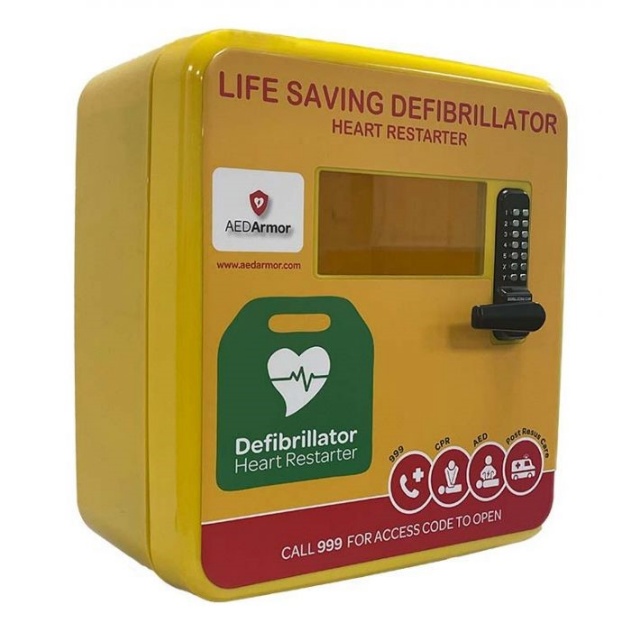
The AED’s will be clearly signposted and will be contained in a bright yellow box which looks similar to the below image.
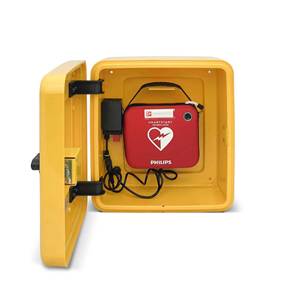
If you require access to an AED, the code to the cabinet can be requested from the Joint Emergency Services Control Centre when dialling 999.
Where are they located?
AED’s have now been placed in the following locations:
| District | Location |
| Half Tree Hollow | Half Tree Hollow Clinic (Outside of main entrance) |
| Francis Plain | The Pavilion Area (In the Green Shed) |
| Levelwood | Silver Hill Shop |
| Blue Hill | Blue Hill Community Centre |
| Sandy Bay | Bamboo Hedge Shop and SHAPE |
| Rupert’s | Sea Rescue Building (Outside the main entrance) |
| Jamestown | Royal St Helena Police Service (Reception) and the Old Customs Building |
| Longwood | Royal St Helena Police Post (Outside) |
| Alarm Forest | Sunflower Creche |
| St Paul’s | KS1 School (Outside) and the Rosemary Plain Bus Shelter |
| There are also other AED’s located in HM Prison, CCC and the St Helena Airport (Departures Medical Room). | |
The Emergency Planning Department will continue to support the availability and maintenance of community AED’s across St Helena as part of its on-going commitment to public safety and community resilience. Members of the public are encouraged to help raise awareness of these facilities within their communities, ensuring more people know where life-saving equipment can be found when it is needed most.
#StHelena #AED #AltogetherSafer
The St Helena Government (SHG) Roads Section has received questions from members of the public about which roads SHG is responsible for maintaining, how repair work is prioritised, and why some roads receive attention before others. To help the community understand how the island’s road network is managed, SHG is setting out how roads on St Helena are classified, and what the Roads Section’s maintenance budget allows it to do.
Understanding the difference between adopted (Government) and un-adopted (non- Government) roads, and between primary, secondary and tertiary roads, explains how maintenance decisions are made and why SHG’s resources are focused where they are.
There are two categories of roads on St Helena:
- Government (Adopted roads)
- Non-government (Un-adopted roads)
Each of these categories can be broken down further as in Table 1.
Table 1: Categories of Roads
| Government (Adopted roads) | Highway | Primary roads | 34144 | meters |
| Secondary roads | 36581 | meters | ||
| Tertiary roads | 44338 | meters | ||
| Non-Government (Un-adopted roads) | District Private on Crown LandPrivate on Private Land | |||
| Community | ||||
Road Definitions & Classifications
Government (Adopted) Roads
Primary roads serve the main centres of population, the main industrial / commercial areas and a ring road connecting the main areas of the island. These roads are used by the most people and carries the most volume of traffic on island. It is also the highest priority when the reactive maintenance plan is formulated. E.g. Side Path Road, Ladder Hill Road
- Secondary roads serve the various communities distributed around the island as well as areas of industry, commerce and agriculture. These roads are at lower maintenance priority than primary roads. E.g. Evergreen Drive in Half Tree Hollow
Tertiary roads are all other surfaced roads maintained by SHG including roads provided as part of the serviced house plots and serve small clusters of 3 to 6 properties or individual accesses. These roads are at the lowest end of priority when
the reactive maintenance plan is formulated.
Non-Government (Un-adopted) Roads
- District Roads: Roads that provide access to individual parcels of land or specific plots. These are classified legally based on land tenure:
- a) Private on Crown Land: Un-adopted roads situated on Crown land used to access leased or allocated plots.
- b) Private on Private Land: Un-adopted roads situated entirely on privately owned land.
- Community Roads: Un-adopted roads that provide shared access to multiple homes, residential clusters, or community facilities. While these roads are not maintained under SHG’s recurrent maintenance budget, they represent shared neighbourhood access routes used by multiple households. E.g. Sapper Way.
Maintenance Strategy and Resource Allocation
To maximise public safety and road efficiency within the available recurrent annual budget, the SHG Roads Section focuses primary efforts on reactive and emergency maintenance across the 115 km adopted road network. Monthly inspections of all adopted roads are conducted to identify hazards and schedule necessary reactive work, with primary roads taking precedence due to high traffic volumes.
There is currently no recurrent budget for long-term proactive or planned maintenance, nor is there funding to undertake work on un-adopted roads (including private roads on the Crown Estate or private land). Under current recurrent funding levels, the budget only allows for approximately 2.5 to 3 km of reactive maintenance across the entire 115 km adopted network each year.
Capital Projects vs. Recurrent Maintenance
Members of the public may have noticed major road resurfacing works completed across the island last year. Please note that these major resurfacing works were capital improvements funded through the Economic Development Investment Programme (EDIP), rather than SHG’s recurrent annual maintenance budget. Recurrent maintenance funding remains strictly limited to essential reactive and emergency repairs on adopted public roads.
Recurrent Budget Limitations
To maximise public safety and road efficiency within available annual funding, the SHG Roads Section focuses its recurrent resources exclusively on reactive and emergency repairs across the 115 km adopted road network. Monthly inspections of all adopted roads are conducted to identify hazards and schedule necessary reactive work, with primary roads taking precedence due to high traffic volumes.
There is currently no recurrent budget for long-term proactive or planned maintenance, nor is there funding to undertake work on un-adopted roads (including private roads on the Crown Estate or private land). Under current recurrent funding levels, the budget only allows for approximately 2.5 to 3 km of reactive maintenance across the entire 115 km adopted network each year.
#StHelena #StHelenaGovernment #RoadClassification
The Health and Social Care Portfolio will deliver a bowel cancer screening programme for adults aged 50 to 74 this November and December, ahead of a visiting specialist’s arrival in January 2027.
Collect your test kit from your nearest health clinic from November.
Why screening matters
Bowel cancer (also known as colorectal cancer) is cancer found anywhere in the large bowel. It is the third most common cancer worldwide, and in the UK it is the second largest cause of cancer deaths. Several people are diagnosed in St Helena every year.
Screening looks for early signs of disease in people with no symptoms. It aims to find bowel cancer early, when treatment has a good chance of curing it. If it is detected early, more than 9 in 10 people are successfully treated.
How it works
The faecal immunochemical test (FIT) detects tiny amounts of blood in your poo, which can be an early sign of bowel cancer. The test is done at home. If your result is positive, you will be invited to an appointment to discuss next steps. A positive test does not mean you have cancer, but you will likely be offered a colonoscopy to check inside your bowel.
Who should take part
Everyone aged 50 to 74, in line with UK recommendations, as the risk of bowel cancer increases with age.
Collecting a kit
From November, 500 test kits will be available from your nearest health clinic during routine clinic hours. Each kit includes everything you need to collect and return your sample. For more information, see our Bowel Cancer Screening FAQ sheet.
If you have any further questions, please contact the Health Promotion team on Tel: 25949 or healthpromotion@sainthelena.gov.sh.
When to see a doctor
If you have symptoms, do not wait for screening. See a doctor urgently. Symptoms include:
- Changes in bowel habits (softer poo, diarrhoea, constipation, or going more or less often)
- Blood in your poo, red or black
- Feeling you need to poo even after going
- Tummy pain, bloating or a lump
- Unexplained weight loss
See your GP if symptoms last more than three weeks. Ask for an urgent appointment if your poo is black or dark red, or you have bloody diarrhoea. Call 999 or go to the Emergency Department if you are bleeding non-stop or losing a lot of blood (e.g. the toilet water turns red, or you see large clots).
Reducing your risk
You can’t always prevent bowel cancer, but you can lower your risk by eating at least 5 portions of fruit and vegetables a day, staying active, maintaining a healthy weight, quitting smoking, drinking less alcohol, and eating less red and processed meat.
#StHelena #BowelCancer #ScreeningProgrammewww.facebook.com/StHelenaGovt