Latest Posts
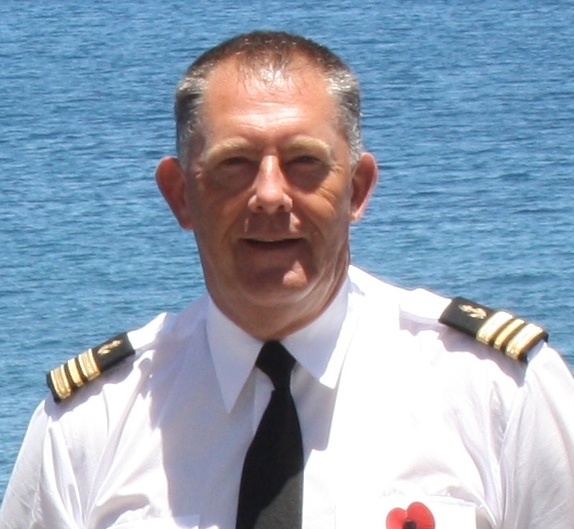 Deputy Harbour Master Steve Kirk (pictured) left St Helena on Friday 9 October 2015, for the Mediterranean Island of Malta, for three weeks of SHG-funded training, arriving back on the Island on 28 November 2015.
Steve undertook four courses, consisting of Port-specific Health & Safety, Company Security, Ship Security, and a basic Power Boat Level 2 course, run by the Royal Yachting Association (RYA).
Steve said:
“We covered anything and everything to do with health & safety within a port environment, and the same with the security officer’s course. Every aspect of the security of a ship and the responsibilities of the company security officer was examined.”
Steve found the overall training to be ‘fantastic’, providing him with a much wider outlook on health & safety, especially within a port.
Steve added:
“My main role as Deputy Harbour Master revolves around the health & safety and security of Jamestown Wharf, for both business and leisure users. My role is not only challenging but also very rewarding.”
Steve spent a year as a Customs Officer on St Helena before transferring over to Port Control as Assistant Harbour Master, followed by promotion to Deputy Harbour Master.
SHG
8 December 2015
Further to the press release of 4 December 2015, St Helena Airport Manager Nigel Spackman has today advised that the second Calibration flight is now due to arrive on Sunday 13 December 2015.
The calibration flight has been rescheduled due to the late arrival of the RMS and the necessity of having the Air Traffic Controller as an Observer in place on the Island when the flight arrives.
It is difficult at present to determine the exact arrival time of the flight but it is likely to be during Sunday afternoon.
As before, the calibration tests will be undertaken by Flight Calibration Services Limited (FCSL), with the aircraft leased from TAB in South Africa.
The public will be kept informed.
SHG
8 December 2015
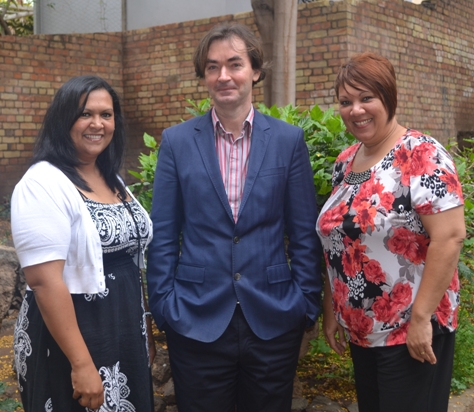
L to R – Patra Duncan, Greg Hall and Anna Crowie
The Safeguarding Directorate recently welcomed two new local staff members to its team – Social Care Officers Anna Crowie and Patra Duncan (photo attached).
Both Anna and Patra work with vulnerable people aged between 18 and 65 years, with Anna’s work focused on home support and Patra working more with disabled clients and helping them to better access the community.
Anna said:
“We often think of who needs care rather than who is providing the care and my role is to bring the two together and assess what carers are there for people who might need them – and also to support those providing the care.
“In line with the newly established Better Life Allowance I will be looking at the vulnerable people in our community, assessing their level of need and ensuring they are correctly entered into our system and receiving the benefit they are entitled to.”
Patra added:
“My work focuses more on working with our disabled clients from Ebony View and Barn View and encouraging them to get out into the community, access the services on offer and even to just have a conversation with someone. So I am working on educational plans to develop clients’ communication skills, using sign language and communication aids to enable them to become more confident in communicating with others.”
Anna and Patra have very important roles in protecting the Island’s vulnerable and both bring a wealth of previous work experience into their new Safeguarding roles. Anna has been a nurse for over 29 years and despite now being in a different role finds her previous nursing skills very useful when dealing with vulnerable people. Patra comes from an education background and her previous role in a Special Needs School in the UK is of great benefit to her Safeguarding role.
Anna and Patra are also currently undergoing an on-the-job training programme and studying to complete their vocational courses online.
Anna commented:
“We have a good team in Safeguarding and a lot of support. The role is a challenge for me but I feel that I have a lot to offer from my previous working background. Every day I’m experiencing something new and building new relationships with clients.”
Patra concluded:
“Working with the clients, learning what they’re capable of and how we can work towards helping them is rewarding in itself. I’m really happy with how the job is going so far, looking forward to the challenges ahead but even more so getting the clients out into the community and helping them to communicate confidently.”
SHG
8 December 2015
Further to the press release of 4 December 2015, regarding the RMS St Helena’s delayed departure from Cape Town, SHG can now report that the RMS left Cape Town on Monday 7 December 2015 at around 3pm. She is expected to arrive at St Helena on Saturday 12 December 2015 at approximately 6am, one day later than originally scheduled.
The RMS will depart as per her original schedule on Sunday 13 December 2015 at 2pm, for her first shuttle to Ascension Island.
It is expected that the RMS will need to stay longer at St Helena on return from her second shuttle to Ascension – and will therefore arrive at St Helena on Tuesday 22 December 2015, one day earlier than scheduled.
The RMS will depart for Cape Town on Wednesday 23 December 2015, as scheduled.
SHG
8 December 2015
Currently taking place in Paris, France, until 11 December 2015 is the 21st UN Framework Conference on Climate Change. This conference is crucial, because it aims to reach a legally binding agreement on climate change – with the aim of limiting global warming to a minimum level – for the first time in 20 years of negotiations.
Among the 50,000 participants at the conference is a delegation from the Overseas Countries & Territories Association (OCTA), of which St Helena is a Member. OCTA presented at the conference and below is St Helena’s contribution to OCTA on the implications of climate change on a small Island in the South Atlantic:
‘Nowhere are the threats and opportunities of climate change more apparent than in isolated island nations. St Helena situated in the middle of the South Atlantic between Angola and Brazil, with a mail ship that calls every three weeks, is about as isolated as it gets. A tiny island, with a population of about 4500, also has a tiny economy. A portion of this economy, however, is diminished each year through diesel imports for power generation.
‘This is changing fast though. Renewable energy output has increased in the last two years from 9% to 35% and plans are afoot to take this figure to 50%, with a second phase of the recent solar farm. A roadmap is also being finalised to take the power supply to 95% renewable by 2020 as the preferred date. A combination of wind, solar and either pumped hydro or battery storage will provide this energy supply, and additional measures will need to be put in place to assure grid stability. Along the way, subsidies to the power and water utility might be redirected to other key spending priorities. The decreased reliance on fuel imports will entail significant money remaining on Island and being re-circulated in the local economy bringing economic benefits that are 3 to 4 times greater than the financial savings being made. This can become a driver for further investment to green the economy as St Helena moves away from its isolation and embraces eco-tourism after the new Airport opens for business next year.
‘Of course it’s not all about the economy. The tiny Island is home to over 30% of the endemic biodiversity of the UK and its Overseas Territories, and its rich heritage dating back to early trade with the East Indies and later ‘home’ to Napoleon and liberated slaves. It is therefore a unique location whose key assets are its natural and historic environment. Environmental protection must therefore be at the heart of all decisions and development on St Helena.
‘Climate change of course presents huge challenges. Jamestown nestles in a deep valley between crumbling volcanic cliffs and increased extreme weather events will increase the frequency of rockfall. Poor stormwater infrastructure is already causing flooding and erosion problems and these will get worse. Farmers struggling to feed the Island despite long dry periods and invasive species, will face even greater challenges.
‘In parallel with plans for a renewable energy system, a programme is being drawn up to address some of these challenges through a combination of traditional hard infrastructure works, and more innovative green infrastructure investment. Could, for example, expansion of the threatened endemic cloud forest not only sink more carbon into soils and critically endangered biodiversity, but also create more cloud and hold more water in its organic-rich soils to steadily feed the watercourses that supply the Island?
‘Could holistic thinking in small island nations demonstrate to world leaders that creating an economy that builds rather than destroys natural and human capital is not just essential – it’s achievable?’
SHG
7 December 2015
WEIGHT MANAGEMENT
Following previous articles around healthy eating I thought that this week I would look at the Eatwell Plate which is a very visual and user friendly way, both to lose and maintain weight, by changing eating habits for life rather than dieting.
The Eatwell Plate highlights the different types of food that make up our diet, and shows the proportions we should eat them in to have a healthy, balanced diet.
It’s a good idea to try to get this balance right every day, but you don’t need to do it in every meal. You might find it easier to get the balance right over a longer period, like a week. And do try to choose options that are lower in salt when you can.
Eating healthily is about eating the right amount of food for your energy needs. On St Helena, many adults are either overweight or obese. This means many of us are eating more than we need, and should eat and drink fewer calories to lose weight.
Based on the Eatwell Plate try to eat the following foods in the proportions shown on the plate:
Plenty of Fruit and Vegetables
Did you know that we should be eating at least five portions of a variety of fruit and veg every day?
Consider frozen and tinned if no fresh fruit and vegetables are available.
Plenty of Potatoes, Bread, Rice, Pasta and Other Starchy Foods
Choose wholegrain varieties whenever you can, or eat potatoes with their skins on for more fibre.
Some Milk and Dairy Foods
Go for lower-fat milk and dairy foods. These are healthier options to help you get enough protein and calcium.
Some Meat, Fish, Eggs, Beans and Other Non-dairy Sources of Protein
These are important sources of protein, vitamins and minerals, and form part of a healthy, balanced diet.
Just a Small Amount of Food and Drink that is High in Fat or Sugar
You can cut down on fat and sugar by eating fewer sweets, cakes and biscuits, and drinking fewer sugary soft drinks, including energy drinks. Remember that fruit juices can also be very high in sugar. Try to choose low sugar varieties of drink where possible.
Is the Eatwell Plate for Me?
The Eatwell Plate applies to most of us – whether we’re a healthy weight or overweight, whether we eat meat or are vegetarian.
However, the Eatwell Plate doesn’t apply to children under the age of two, because they have different nutritional needs. From the ages of two to five, children should gradually move to eating the same foods as the rest of the family.
For further information please contact Marian Kanes, Health Promotion Trainer, at hp.trainer@publichealth.gov.sh, or Marian Yon, Health Promotion Coordinator, at marian.yon@publichealth.gov.sh. Alternatively you can call tel 22500, ext 211.
Marian Kanes, Health Promotion Trainer
SHG
7 December 2015
WOULD YOU LIKE TO COMPLETE IT ONLINE?
The Statistics Office is now in the final stages of preparing the Questionnaire to be used in the 2016 Population & Housing Census. In addition to the traditional paper questionnaire, there will also be an option to complete it online.
The pilot exercise held in November provided useful feedback which is being incorporated in the design of the final questionnaire. During the development of the Census consultations have been held and feedback has been given by the general public and key stakeholders. Thanks to the efforts of everyone who took part, the team has been able to develop the best possible Census questionnaire for St Helena.
Dr Paula McLeod, Statistician and Census Supervisor, said:
“Online completion may be a better option for some households – many people now prefer to complete and return information online rather than filling out traditional paper forms. For some households, the opposite will be true.
“Online completion carries advantages for the Statistics Office, as it is cheaper to administer and we have much quicker access to the data. As a new option, it is natural that there will be some questions and concerns – but we are working to make sure that online completion is easy, secure and at no cost to the respondent.”
Additional megabytes will be provided to households to ensure that online completion does not ‘cost’ anything to people taking up this option. To ensure resources are allocated appropriately, the Census team requests that anyone who is interested in online completion registers their interest by providing the team with the following information:
- A contact email-address and telephone number for you
- Your District
You can provide this information by email (statistics@sainthelena.gov.sh) or by telephoning 22138. Alternatively you can call via the Castle switchboard on 22470, or just pop in to the office.
Remember – We Count Because YOU Count.
If you have any questions about any aspect of the Census, or are interested in joining the team as an Enumerator, please get in touch by using the contact details above. Please note the Statistics Office has now moved one floor up in the Castle, directly above their old office.
SHG
7 December 2015
Currently in dock at Cape Town is the RMS St Helena, scheduled to depart on Sunday 6 December 2015. However, due to an issue with cargo, she will now be departing on Monday 7 December, with the time of departure yet to be determined.
The reason for the delay is that an amount of frozen cargo for St Helena, when inspected as normal, was found to be at a temperature of -17 degrees C, rather than the minimum of -18 degrees C allowed for export by the SA Primary Produce Export Control Board (PPECB).
The goods concerned have now been transferred to a blast freezer to bring the temperature down to at least -18 degrees C, so that the PPECB will release them for export.
Since the terminal does not accept cargo over the weekend, the remaining cargo from the blast freezer will now be loaded onto the ship on Monday 7 December, when the RMS will depart Cape Town.
Passengers will still join the ship on Sunday, as advertised. The estimated time of arrival at St Helena will be announced in due course.
SHG
4 December 2015
A second round of Calibration flights for St Helena Airport is planned for next week, with the Beechcraft King Air 200 aircraft due to arrive on Saturday 12 December 2015 and depart around Sunday 20 December.
As before, the calibration tests will be undertaken by Flight Calibration Services Limited (FCSL), with the aircraft leased from TAB in South Africa.
The exact date and time of arrival will be dependent upon suitable weather and other factors and every effort will be made to inform the public as early as possible of the likely arrival time.
Further updates will follow.
SHG
4 December 2015
Damian Small (pictured) arrived on St Helena at the end of October 2015 to undertake his role as a Probation Officer working at HM Prison, Jamestown. He is initially on Island on a one year contract.
A large part of his job involves him encouraging, supporting and assisting individuals to make changes in their lives. His role will see him assess and manage the risks posed by individuals through their offending and to hopefully reduce the risks of re-offending.
Damian said:
“Research shows that supporting and enabling change in individuals is the key in reducing offending behaviour. This is the traditional role of the Probation Service and I believe it is still the key to how we work best today. To achieve this, I work with individuals and deliver programmes to them, based on their individual needs and circumstances.”
Damian has been a Probation Officer in the UK for six years and has held a number of posts in Probation Service, including as a General Offending Manager, where he was responsible for assessing and designing sentence plans for offenders. He spent three years delivering a structured programme of rehabilitation for perpetrators of domestic violence.
He has experience of working with a diverse range of individuals ranging in age and offence types, including murder, domestic violence, death by dangerous driving and sexual offences.
Damian added:
“I have built my skill set and grown to understand the importance of building trust with those I am working with. Group work is a very powerful experience for individuals, and I have witnessed people take responsibility for their behaviour and go on to make very positive changes in their lives.
“Working with people and supporting them to make positive choices and changes was a big factor in why I chose to become a Probation Officer.”
SHG
4 December 2015